Built by Scaglietti
Not by Pinin Farina, who drew it, but by Carrozzeria Scaglietti in Modena. Panels formed by hand over a tubular frame, the same workshop and the same methods behind Ferrari’s competition berlinettas of the period.

The third built · one of fifty
Named for a place it had never seen.
The first of its kind to arrive there.
No road-going Ferrari had carried a place name before. This one was built for California: the sun, the open roads, the appetite for something faster than a touring convertible.
Ferrari's American distributors saw the gap and pressed for it. The result was a roadster suited to a particular light and a particular clientele, named, without modesty, after the state it was made for.
Built for one place.
Admired in every other.
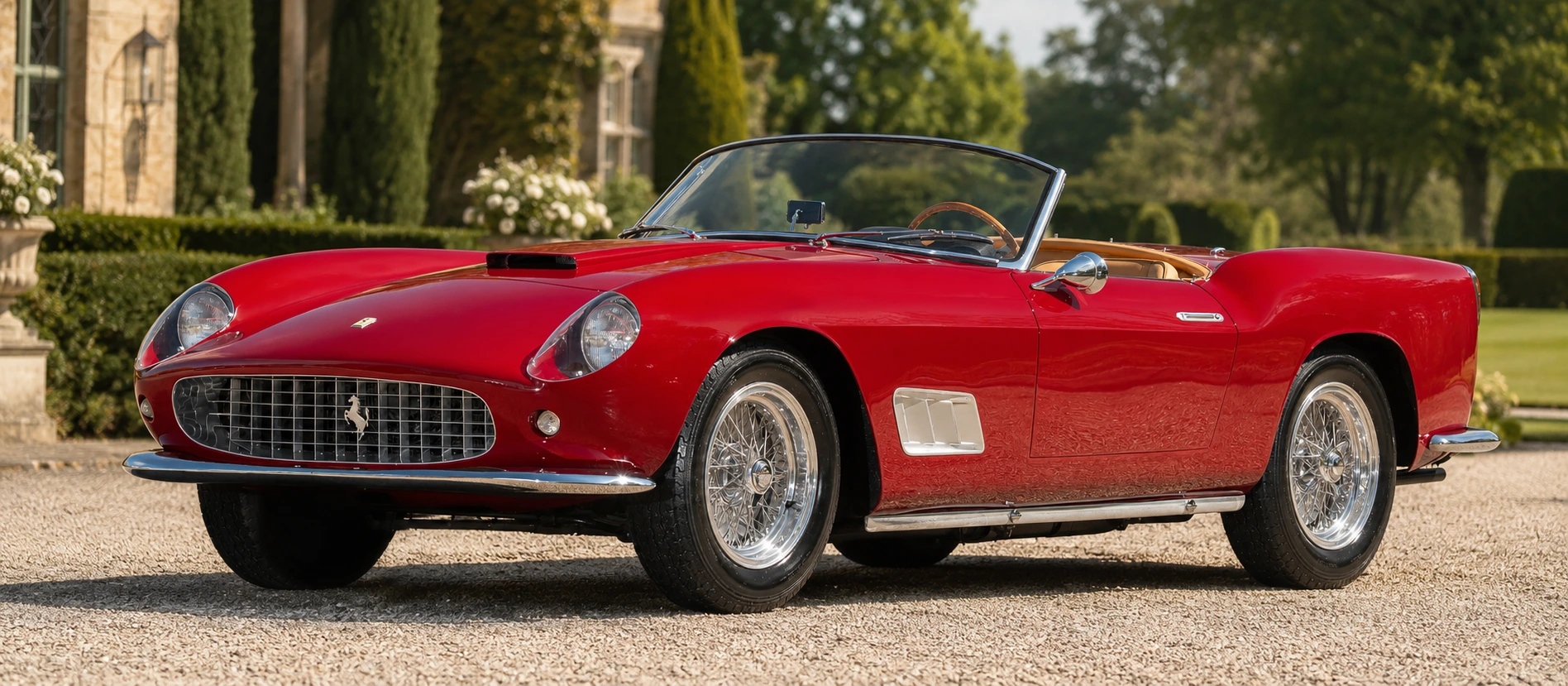
The shape began as a Pinin Farina drawing and was built by Carrozzeria Scaglietti in Modena, by hand, the way Ferrari built its competition cars. Steel over a tubular frame, aluminium for the opening panels.
From the waist down the line is the racing berlinetta's. Only the cut roof and the raked screen mark it as an open car.
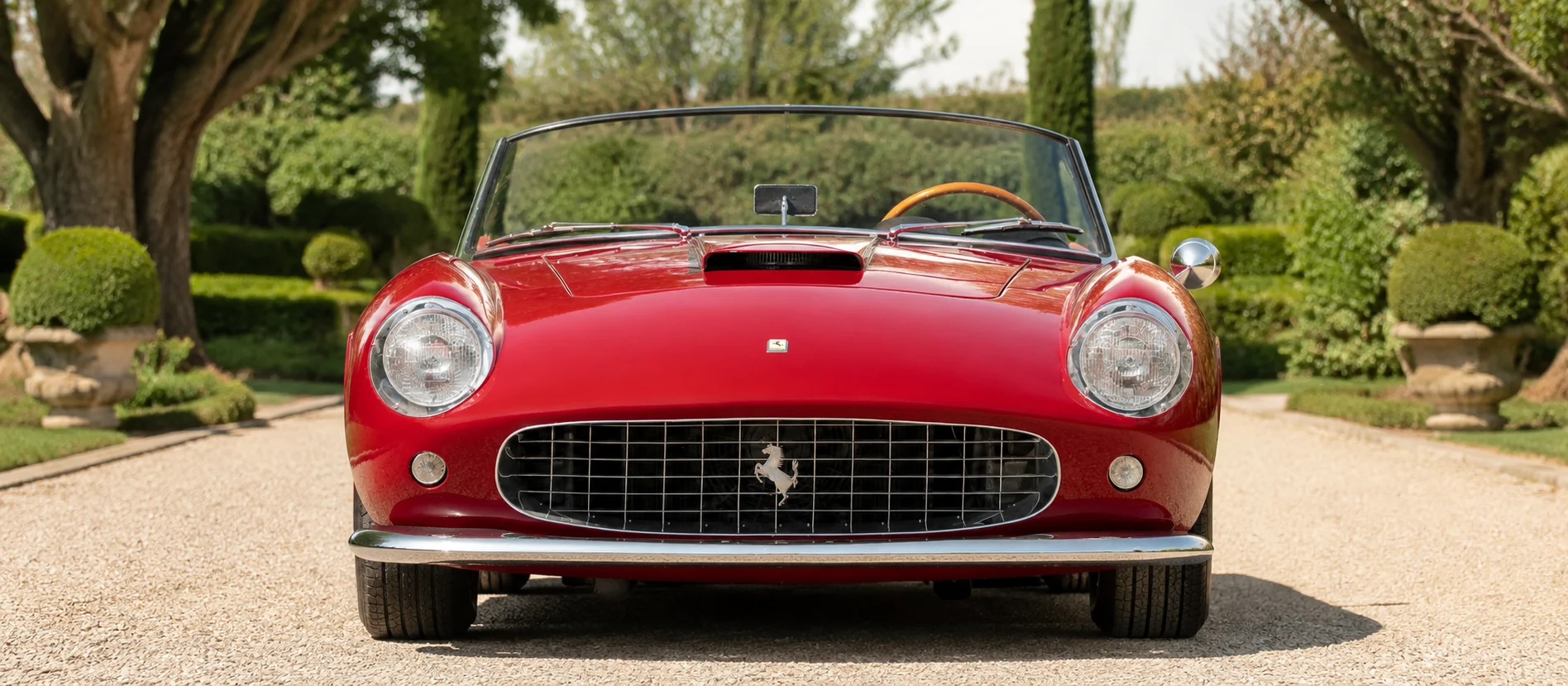
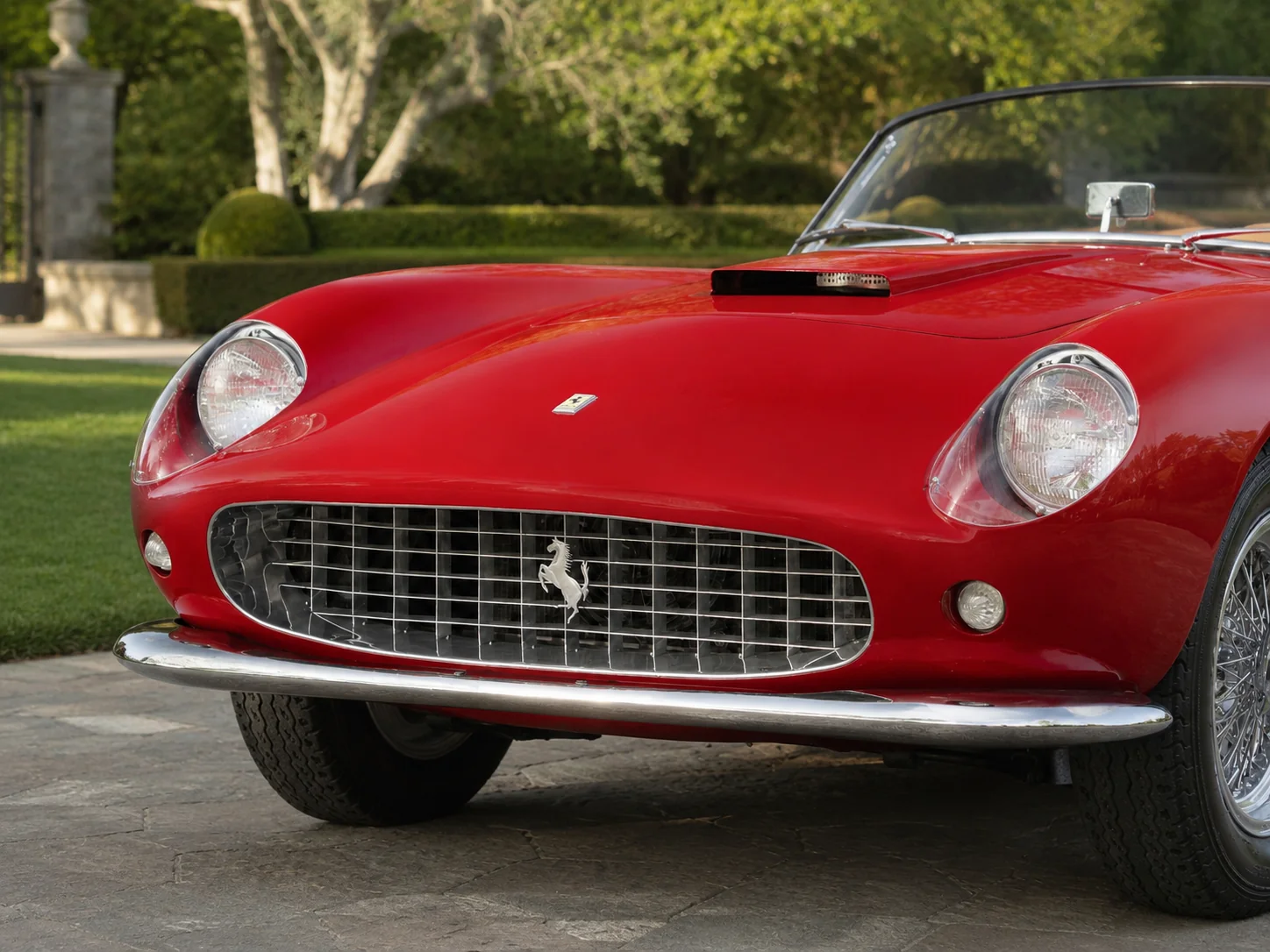
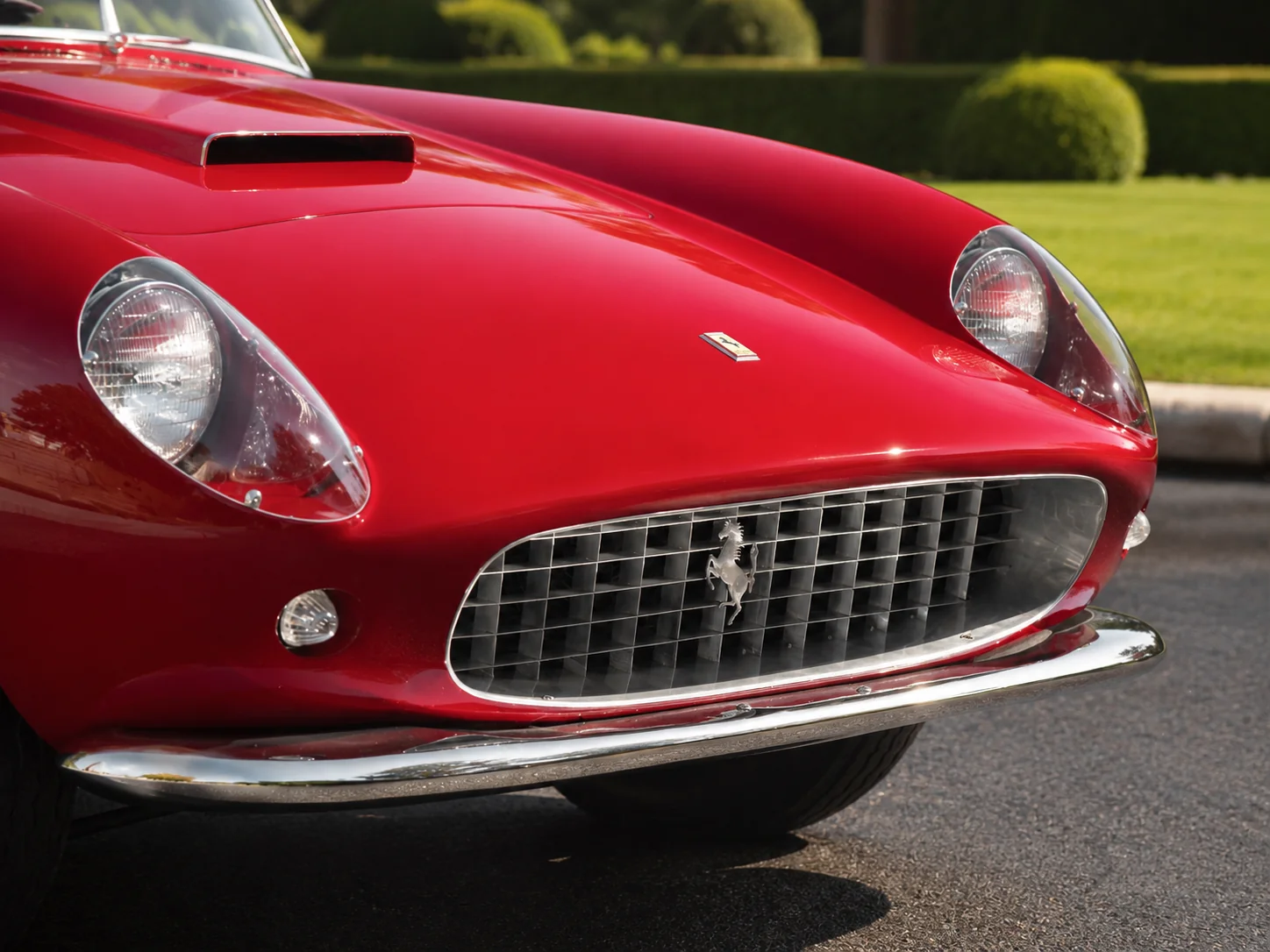
Buyers chose between open lamps and faired units. This is one of thirty-eight built with the headlights covered, plexiglass following each wing unbroken into the nose. The car reads longer and lower for it, and it remains the configuration most prized today.
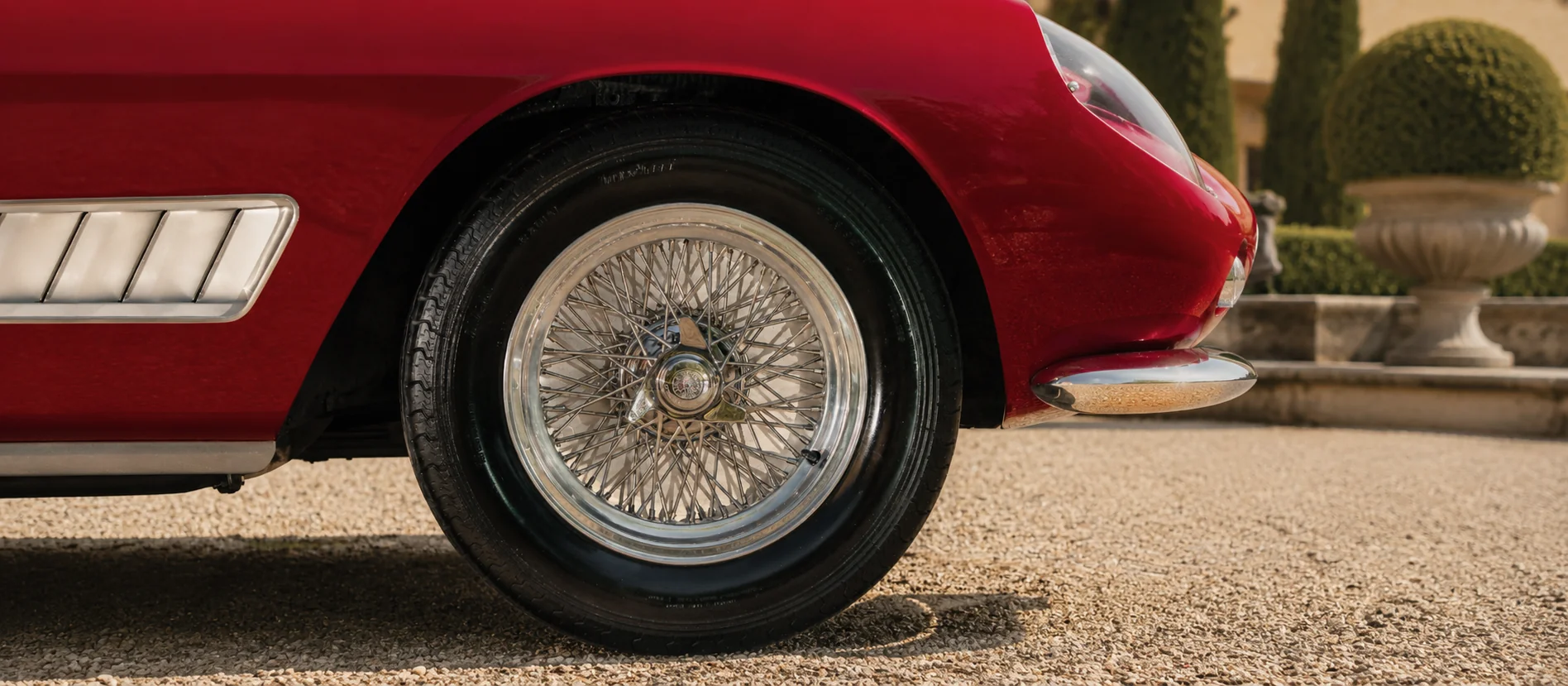
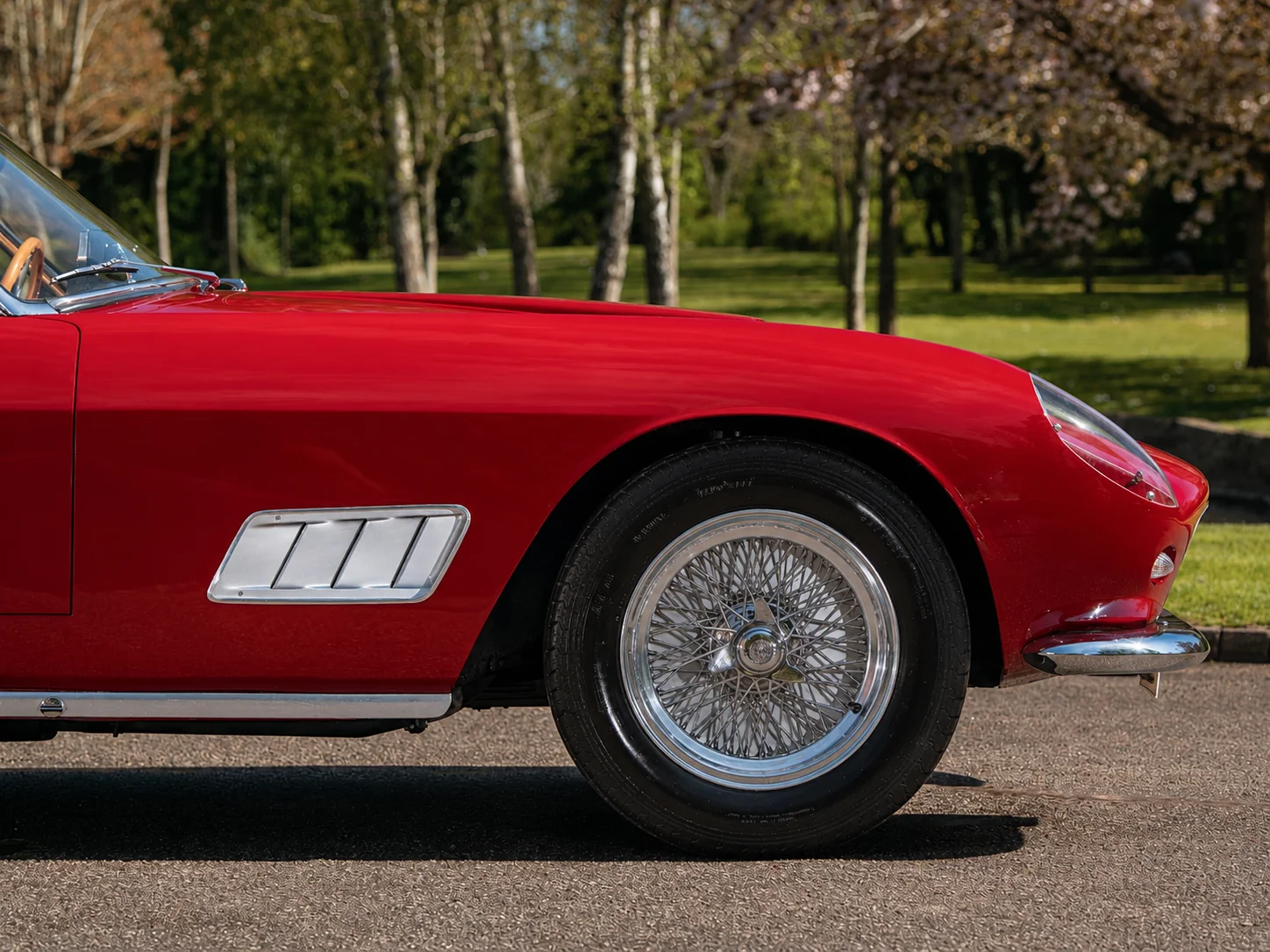
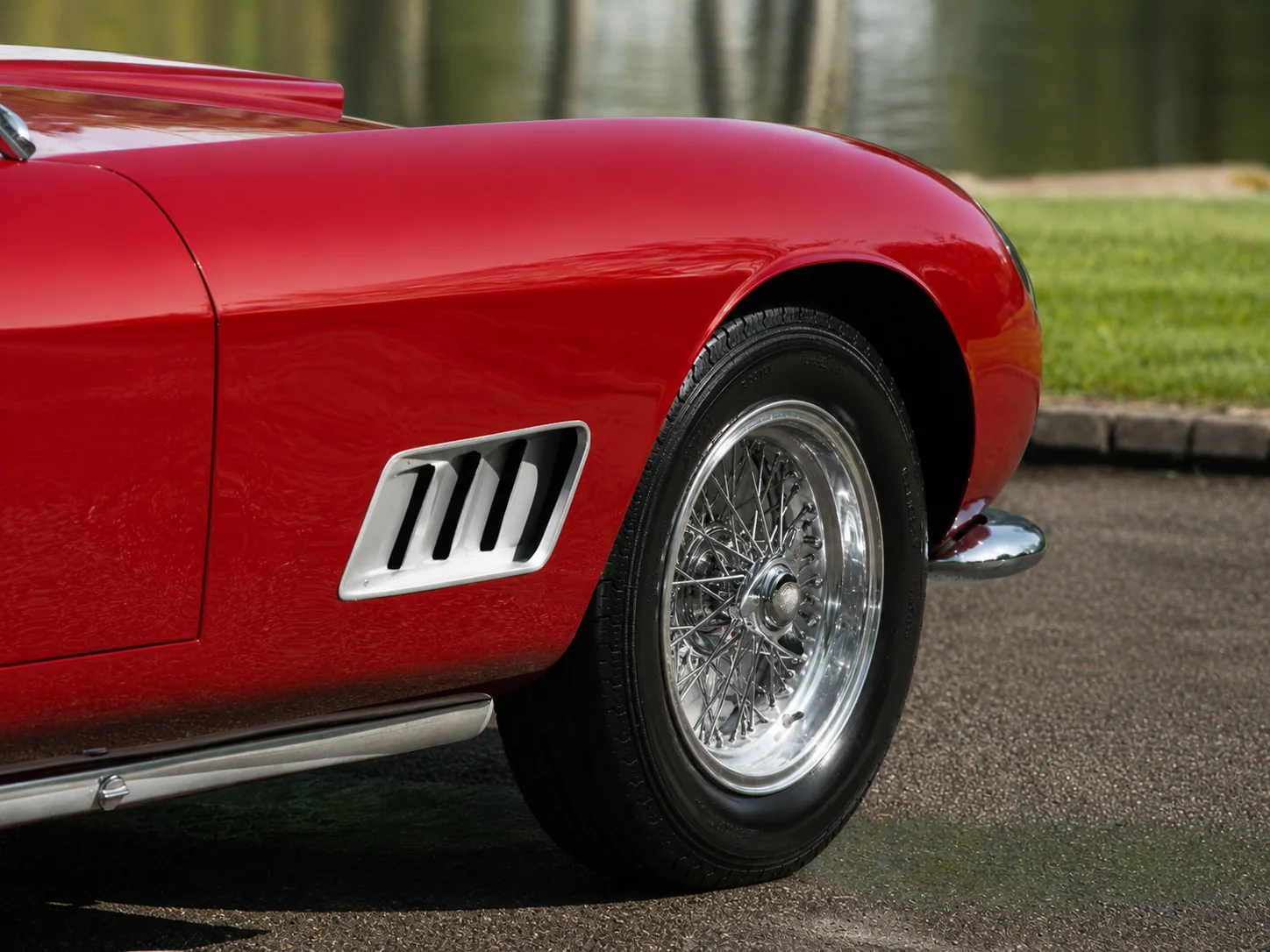
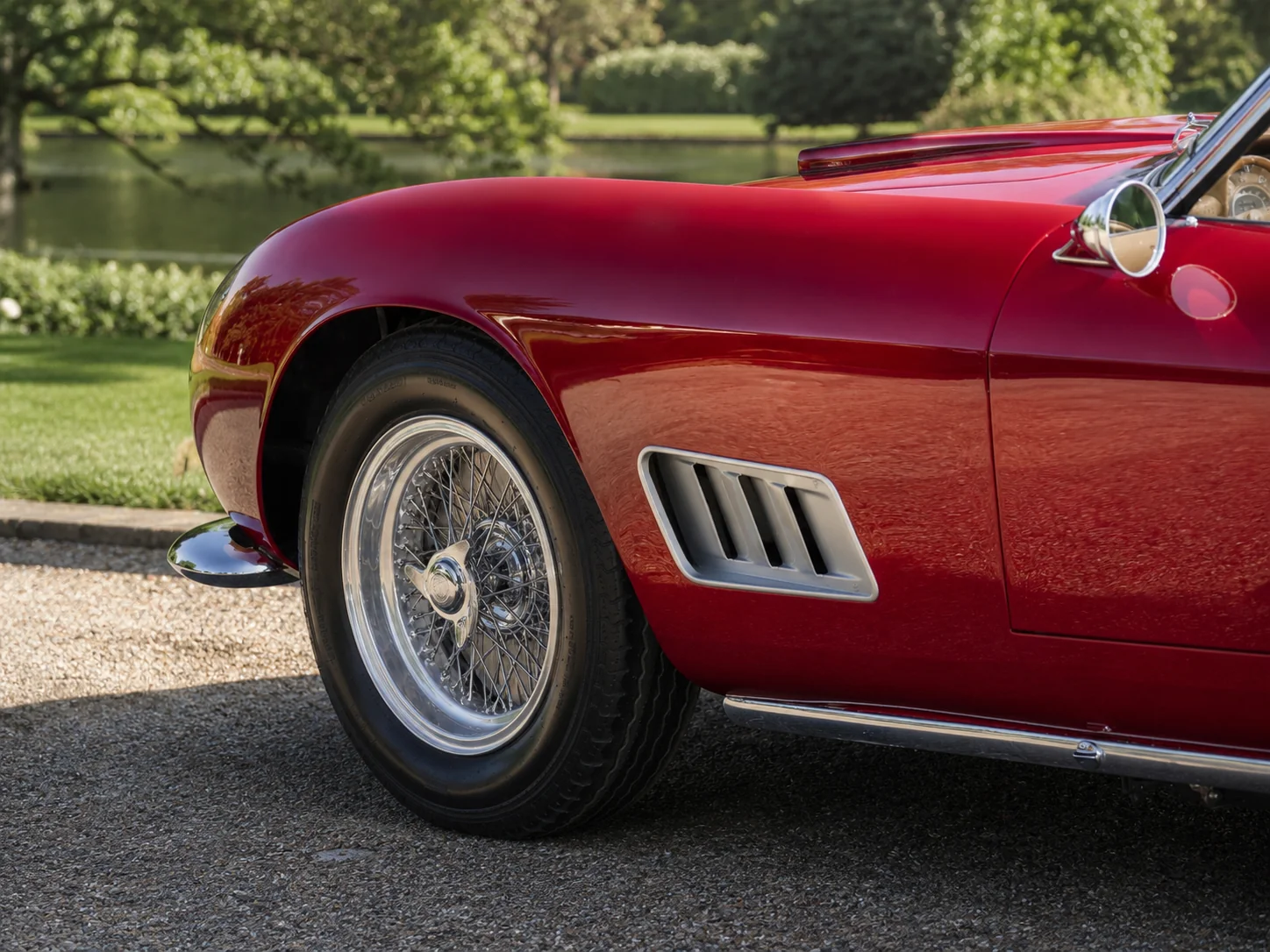
The long chassis leaves its own tells. Three vertical slots vent each front wing, where the short-chassis cars carried two. The bonnet intake stands proud rather than sunk, and ahead of the rear wheels sits the berlinetta's recessed hip, carried over intact. At the front, the wide grille the Italians called a shark's mouth. Nothing on the car is decoration. Every line answers to something.
An open car with a
closed car's heart.
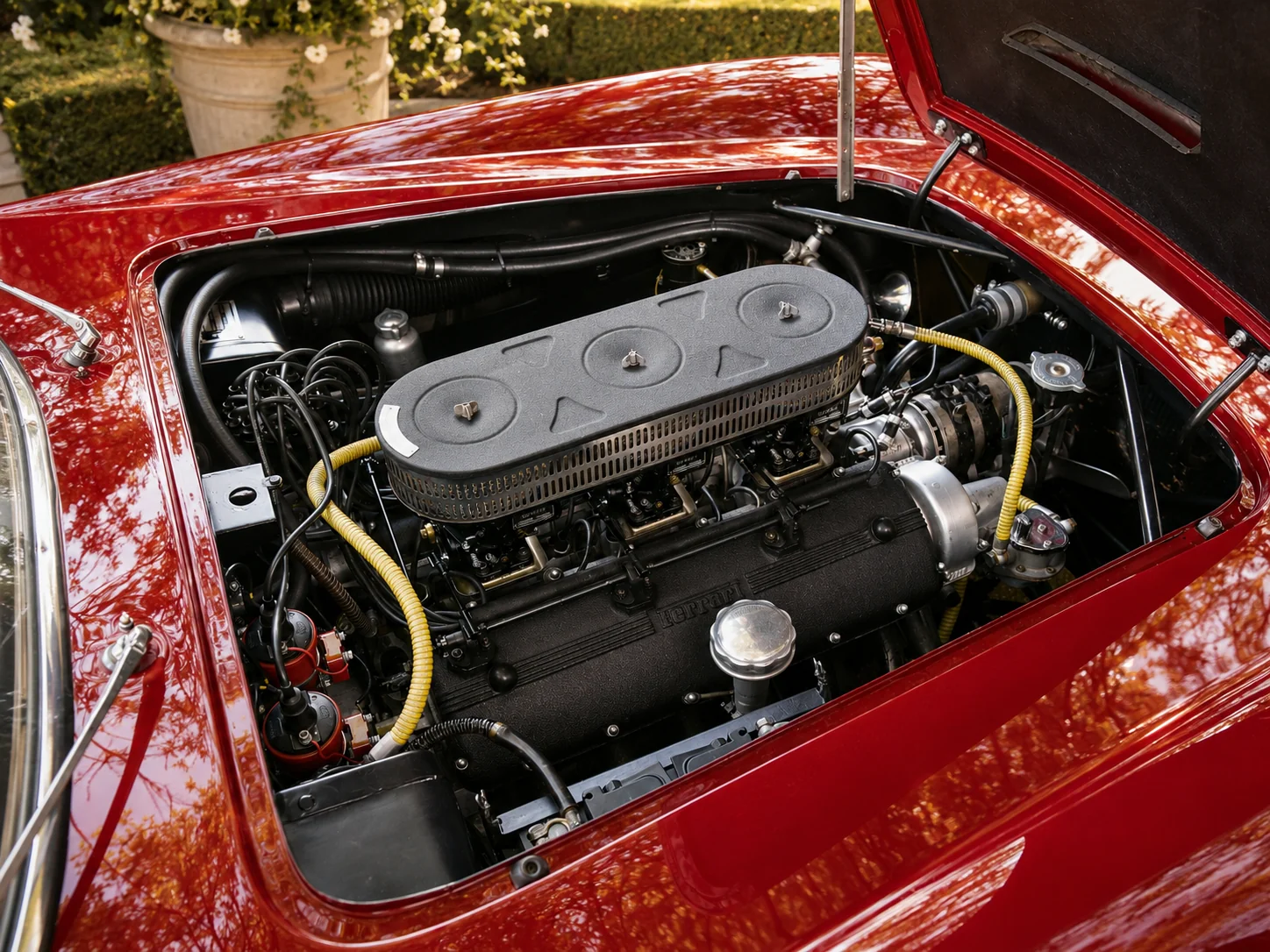
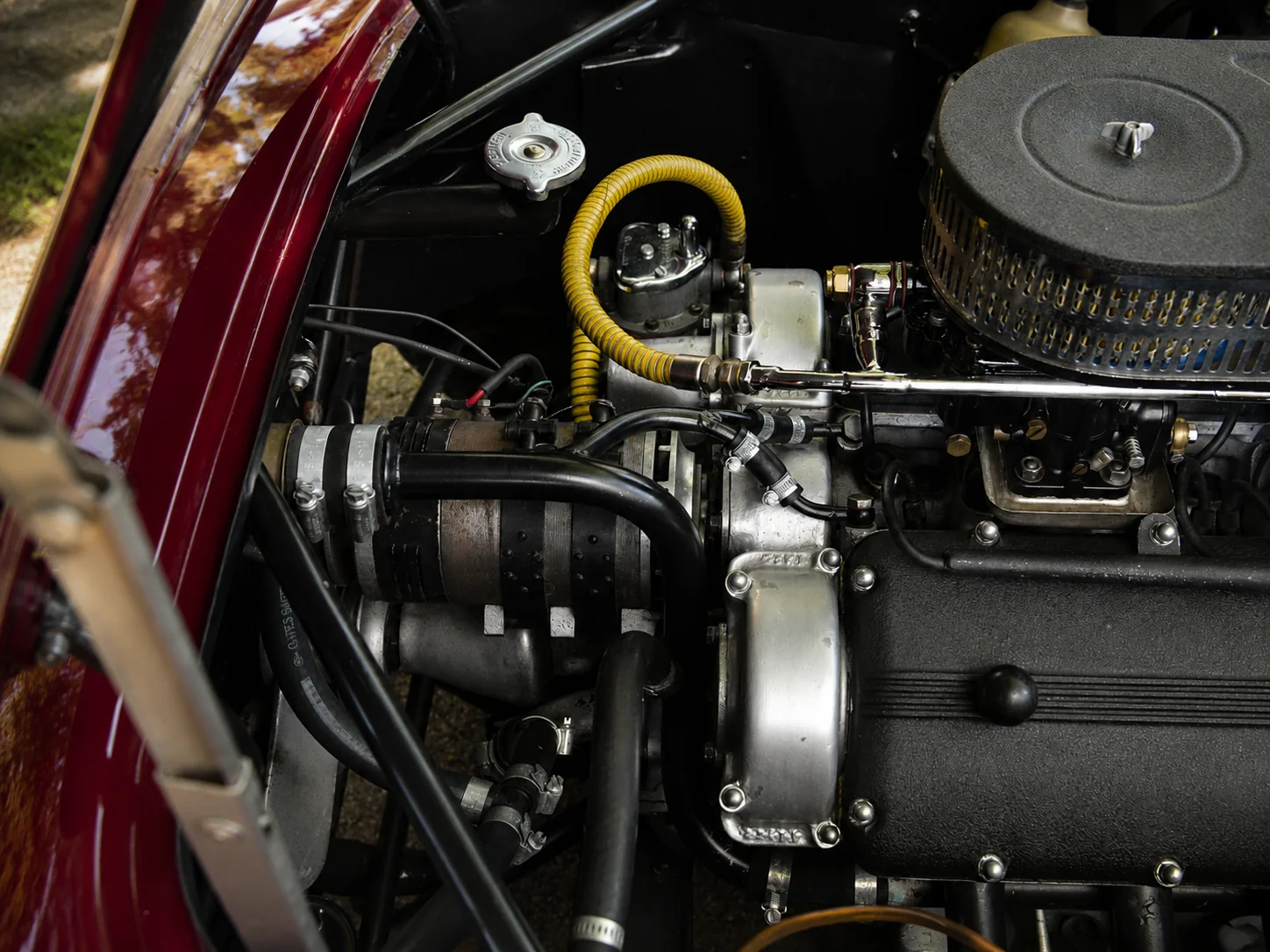
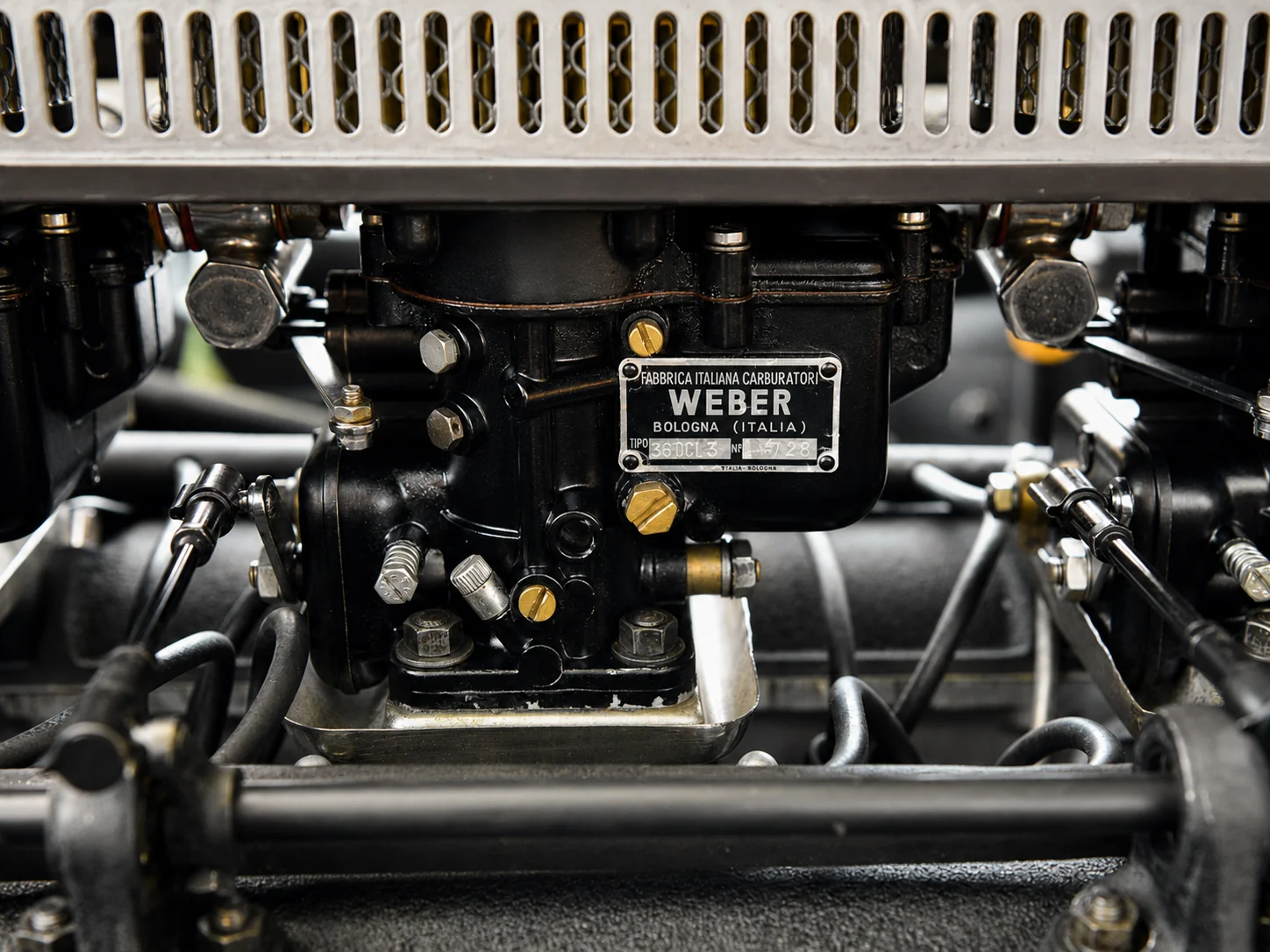
Under the bonnet sits the three-litre Colombo V12, the engine that defined the entire 250 series. Sixty degrees, single overhead camshaft per bank, two valves per cylinder, fed by three Weber carburettors.
Displacement is 2,953cc, to the same essential specification as the competition berlinettas built alongside it. This is the same family of twelve that carried Ferraris to Le Mans and to victory on the Tour de France.
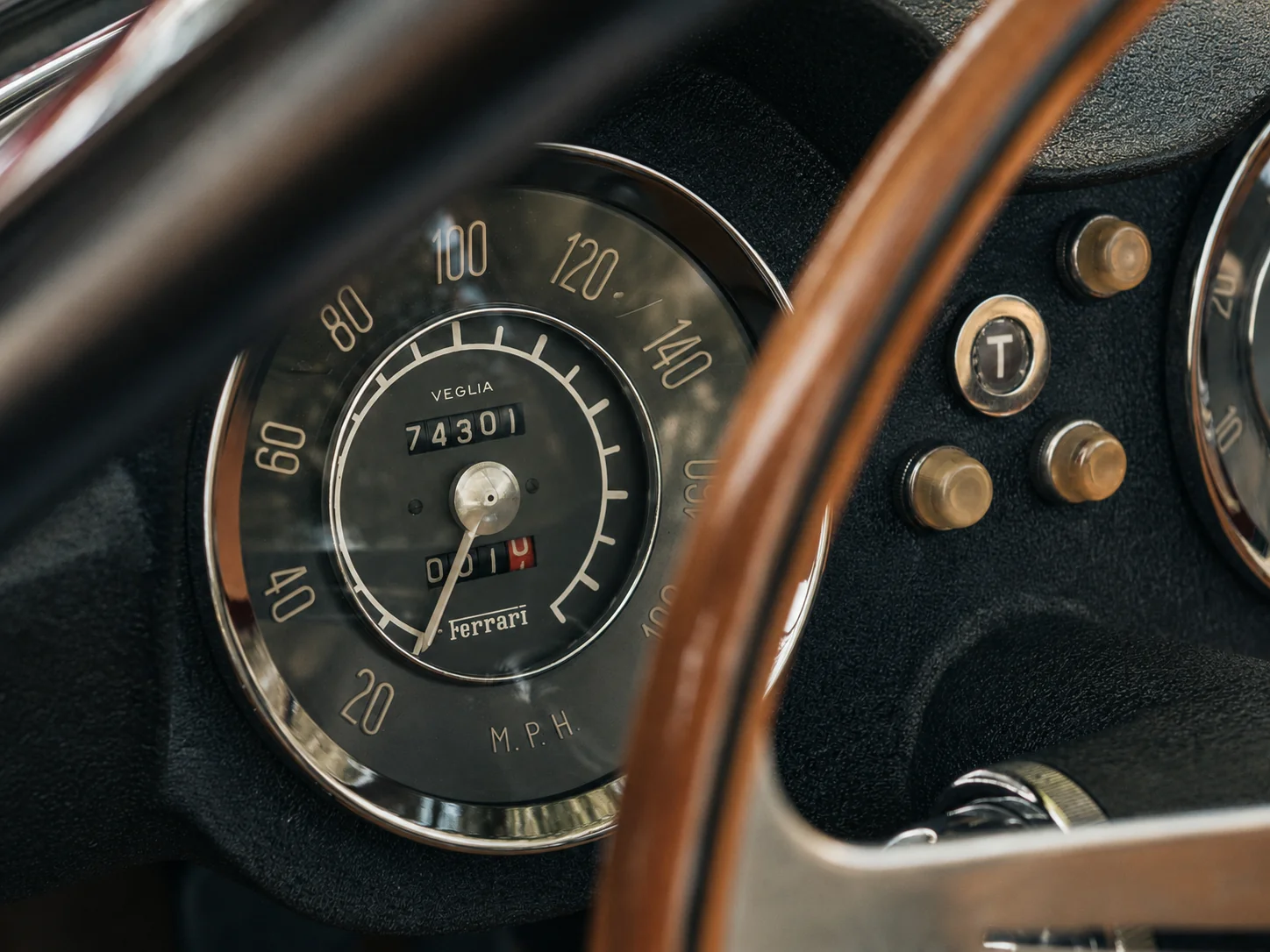
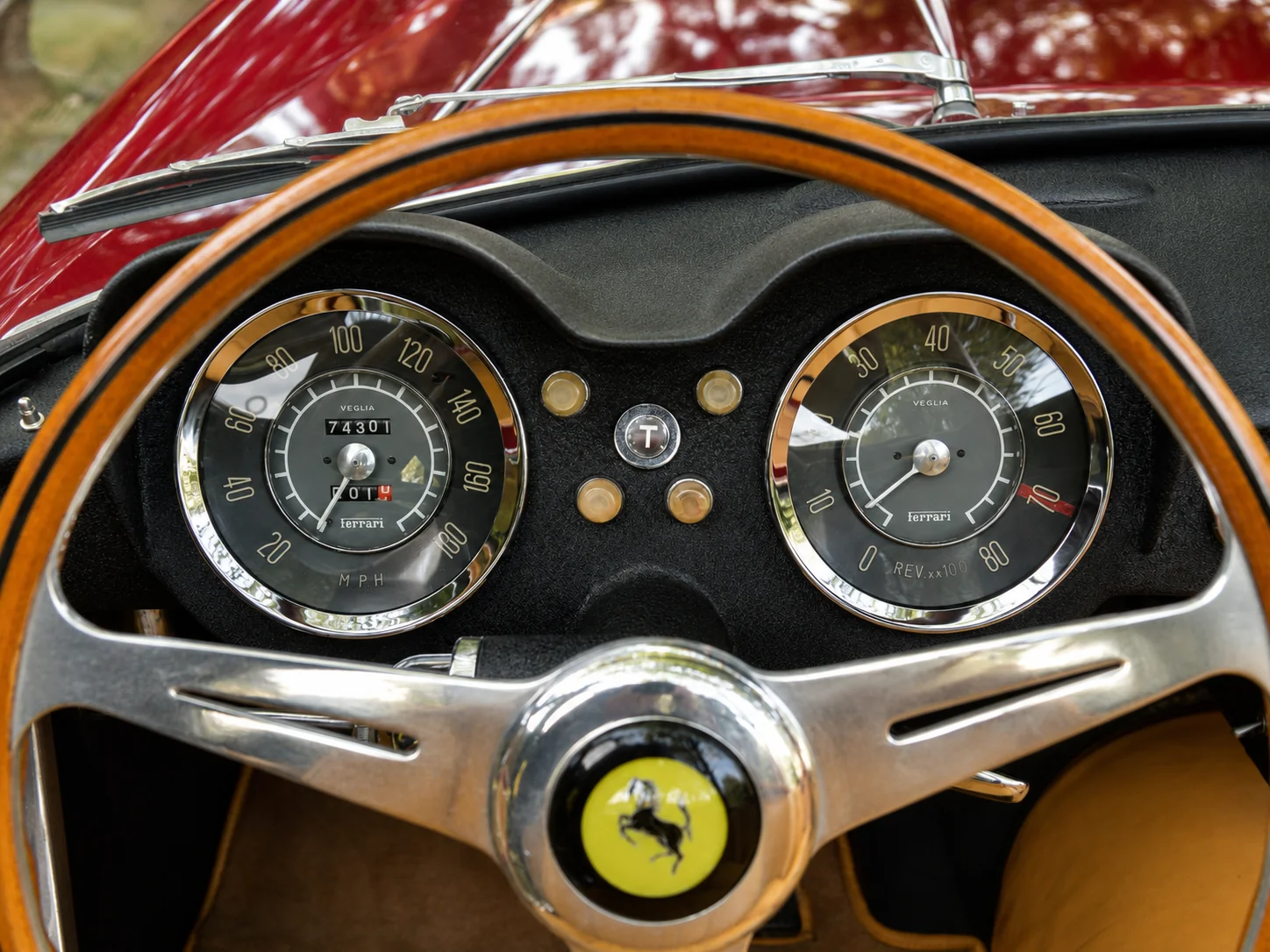
In period Ferrari quoted around 240 horsepower at 7,000 rpm. Figures of the era were claims more than measurements, and a prospective owner should treat them as such. But the character is not in doubt: a high-revving, hard-edged twelve with a voice unlike anything else of its decade.
Drive reaches the rear wheels through a four-speed manual gearbox, the same unit fitted to the berlinettas. This is an early car, and it stops on drums at all four corners, as the first of the line did before discs arrived at the end of production.
Every 250 California has a story.
This one has a number.
Of the fifty long-wheelbase California Spyders, this is the third to leave Scaglietti's workshop, and the very first delivered to California itself. The car built for a place reached that place before almost any other, and for a model defined by its name, no provenance sits closer to the origin of the story.
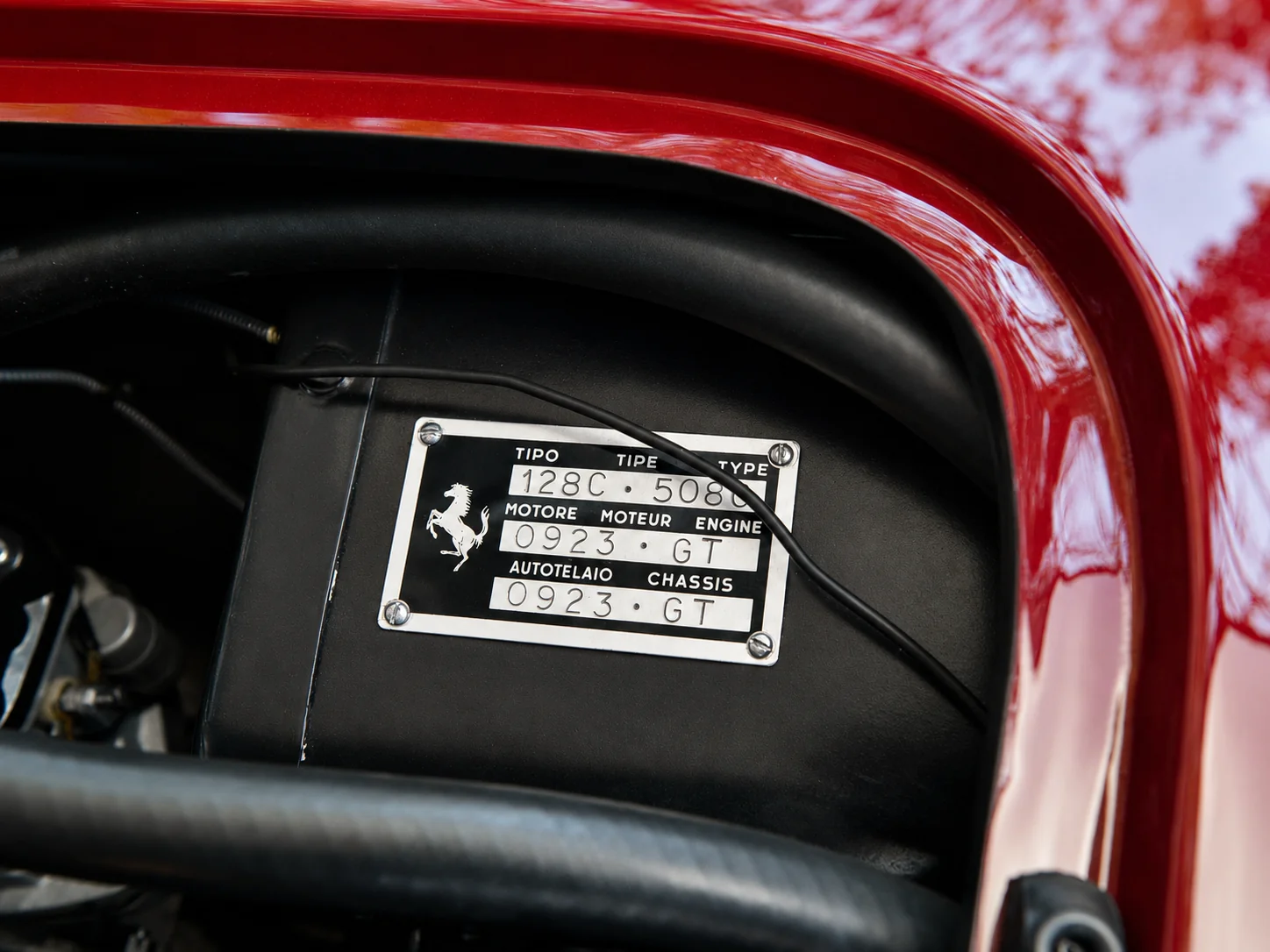
It is one of thirty-eight ordered with faired headlights, and among the first nine of all one hundred and six cars fitted with the early Tipo 128 C engine. Its numbers match throughout: chassis, body, engine and gearbox, confirmed within Ferrari's Red Book Classiche certification. The engine plate reads 0923 GT, the number stamped into the chassis it has always sat in.
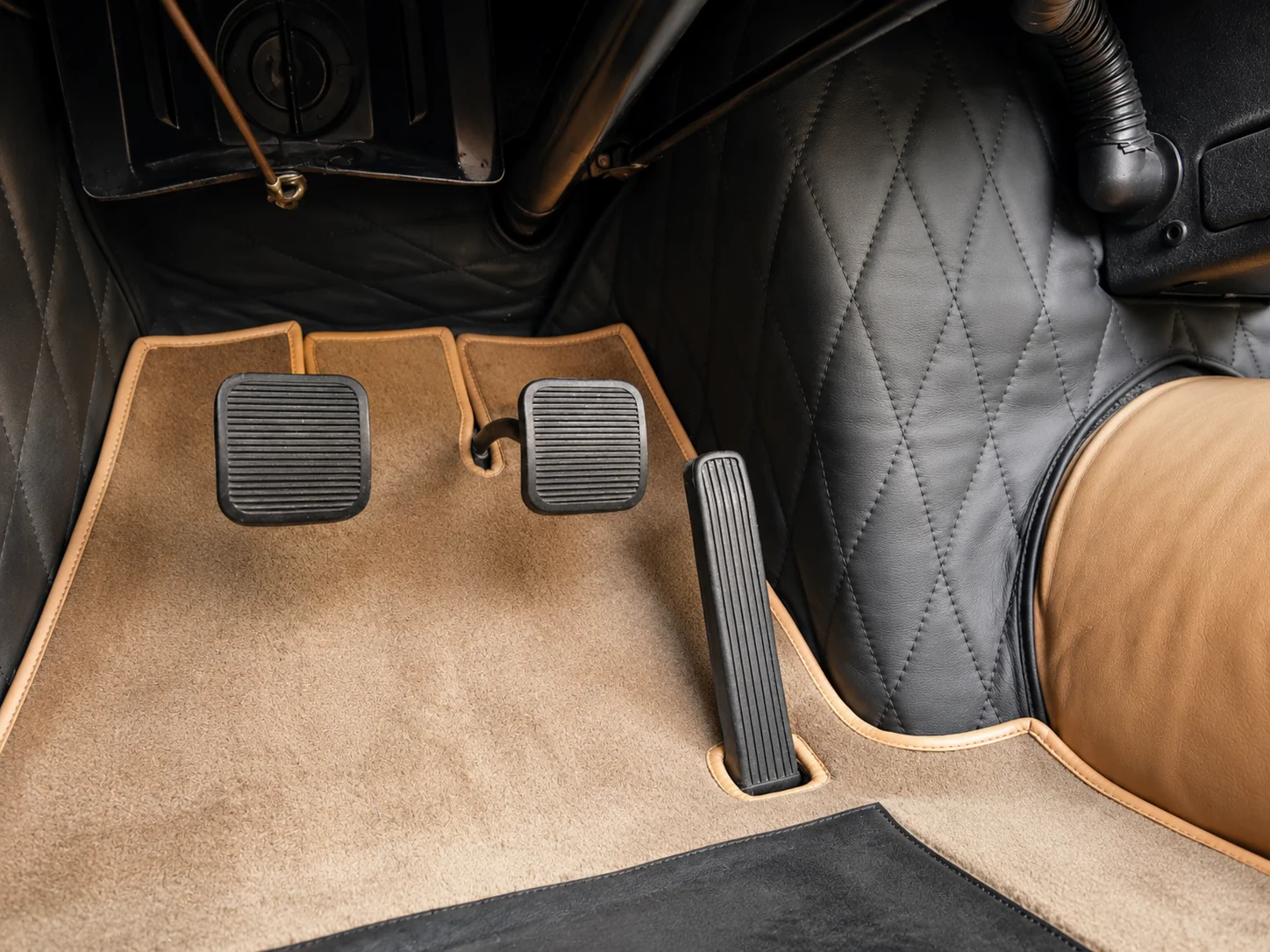
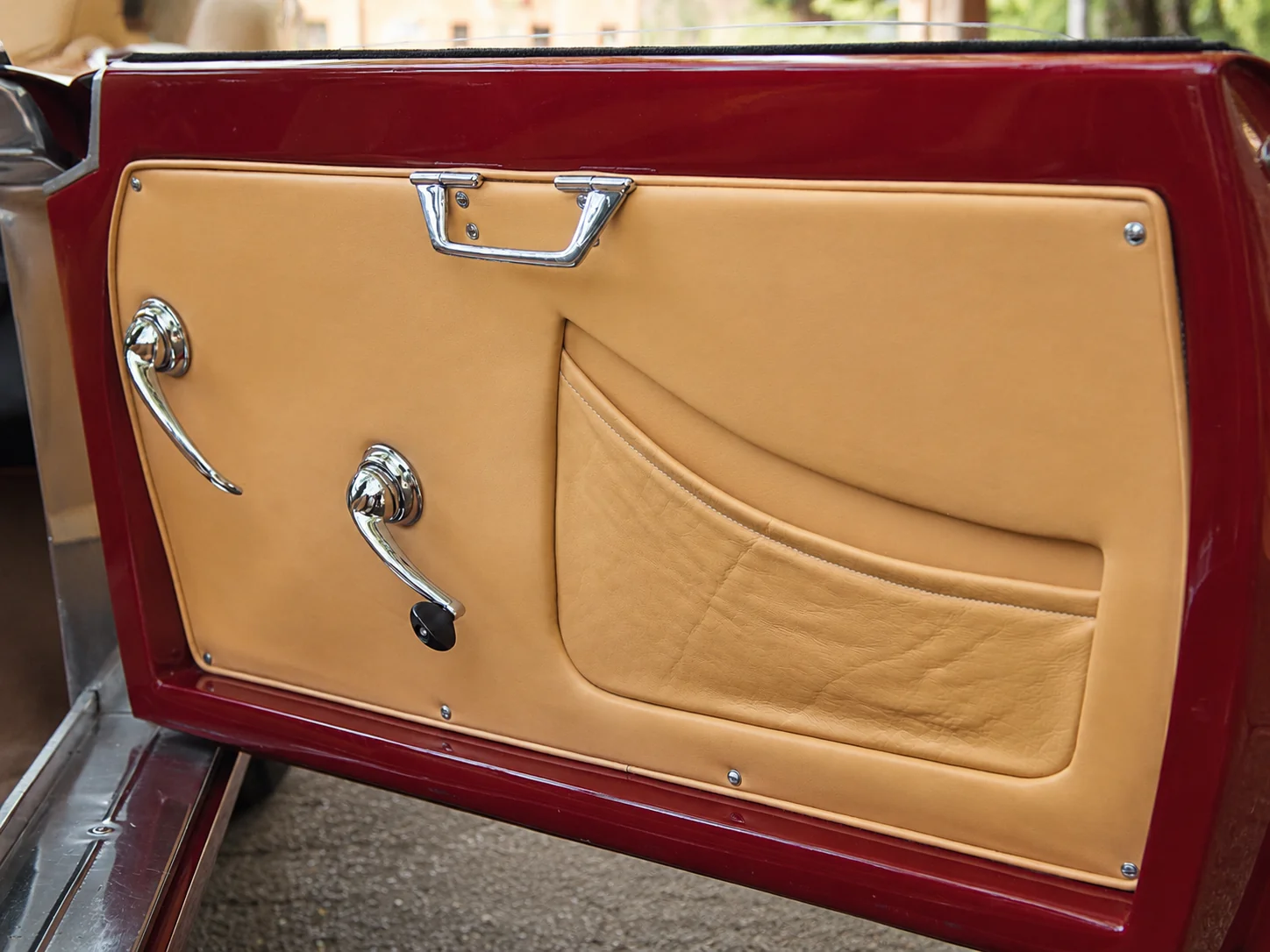
Finished in dark red over tan leather, the car is registered in the United Kingdom with taxes paid, and presents in exceptional condition throughout. What is offered here is not a restoration project or a car in search of its history. It is a documented, matching-numbers example, third of fifty, at the very start of the line.
Specifications reflect the model and period record. All details are subject to buyer verification.
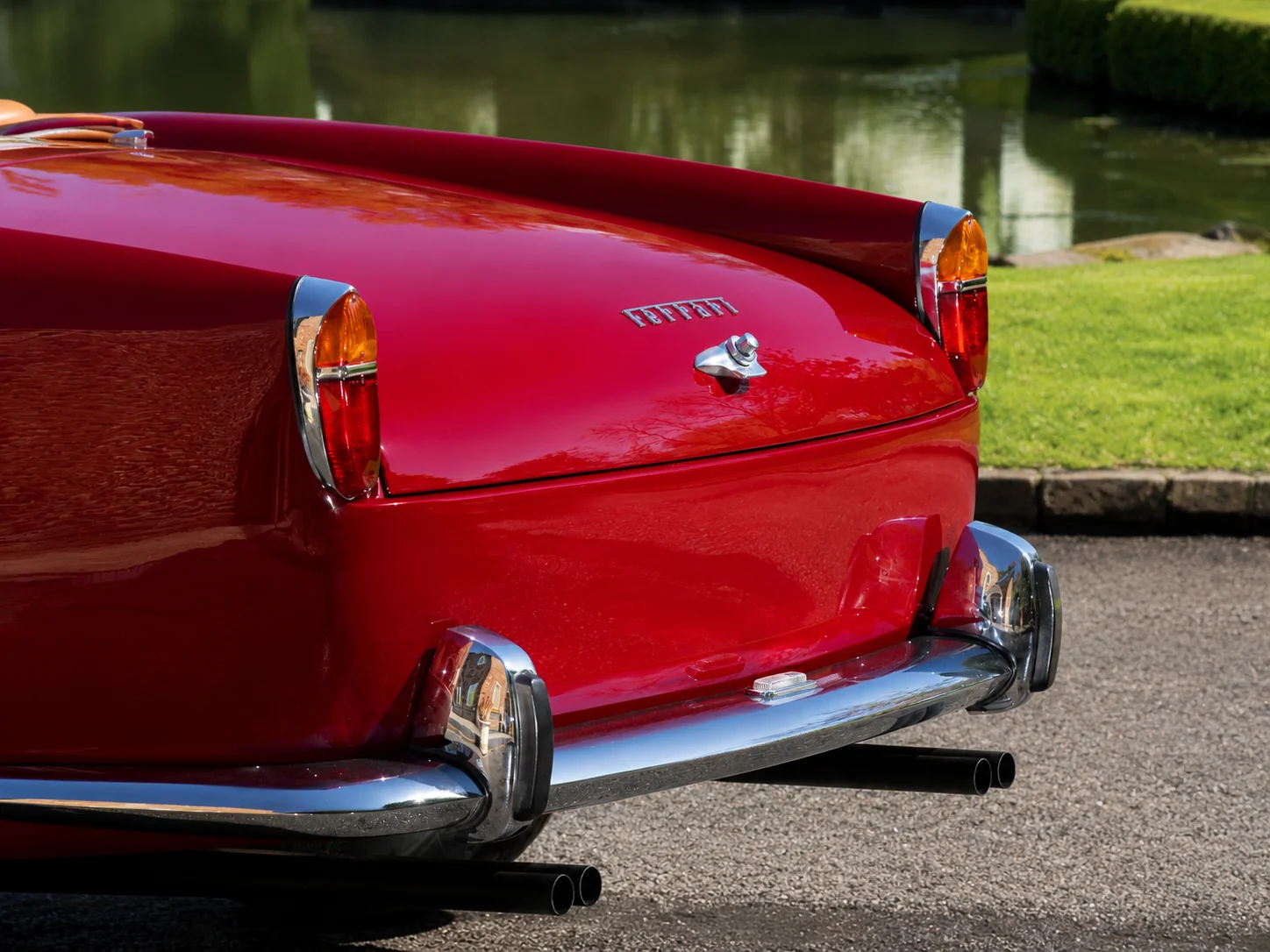
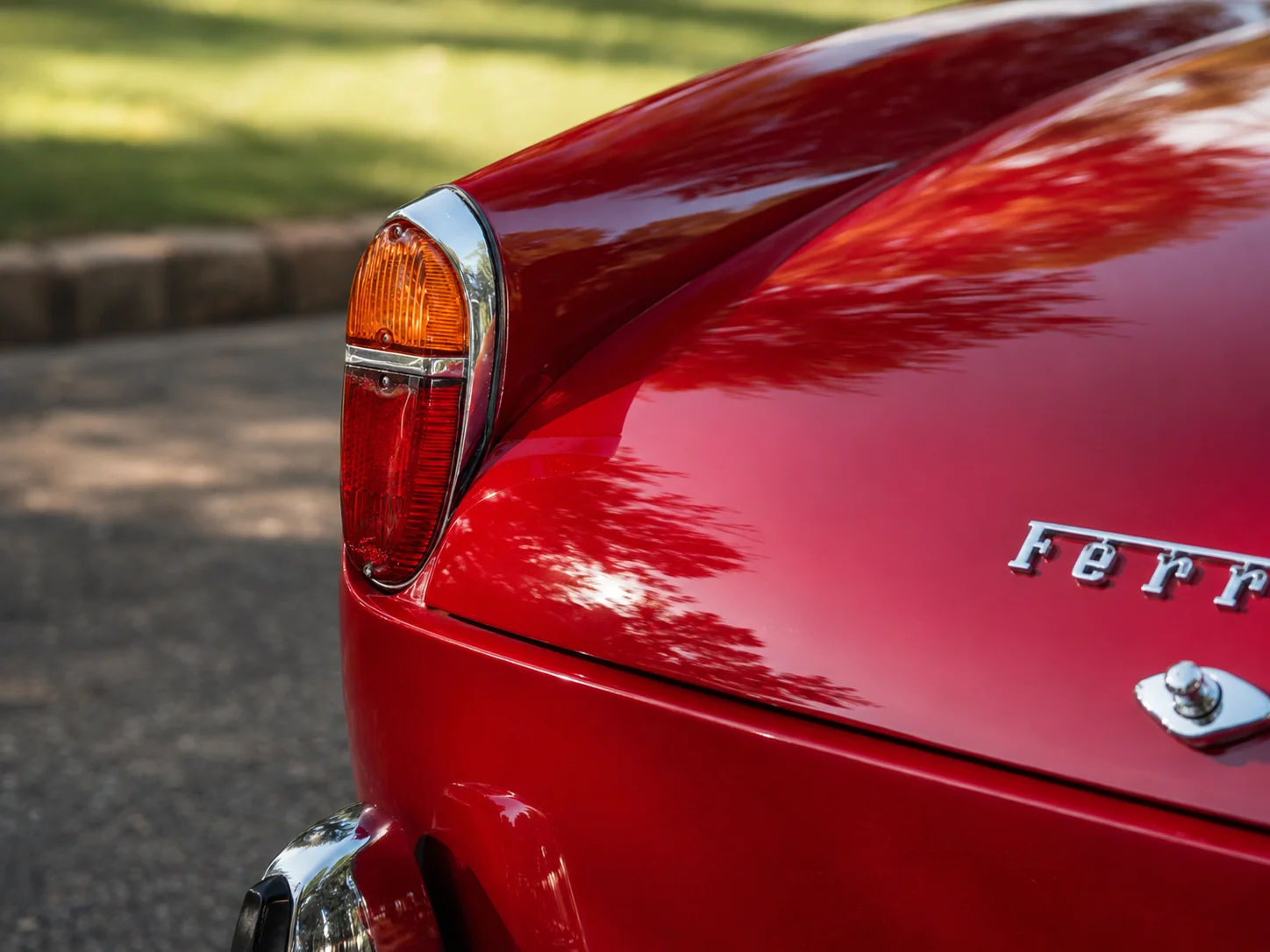
Scaglietti built this car to be read in the round. There is no bad angle, and no detail added for its own sake.
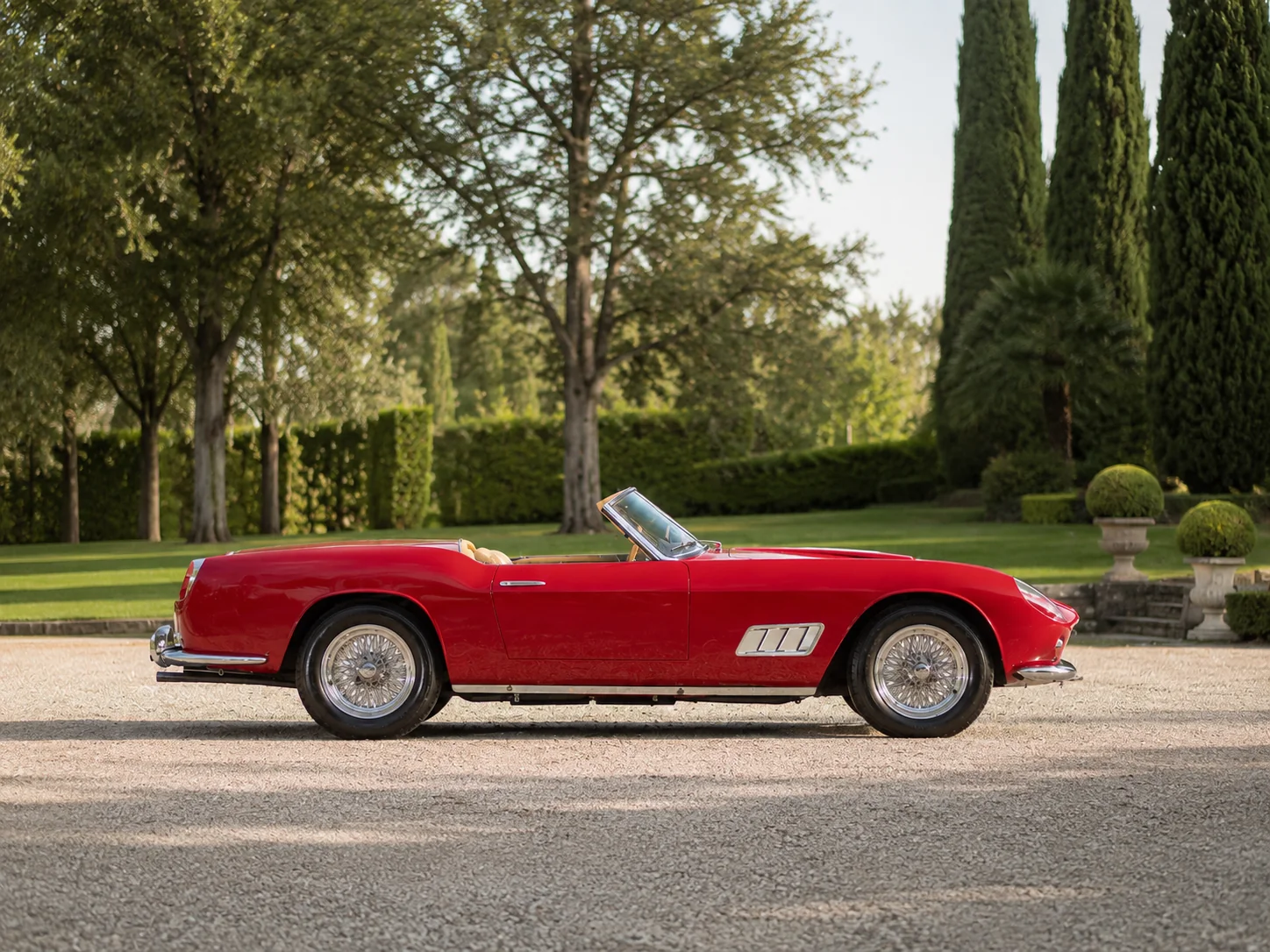
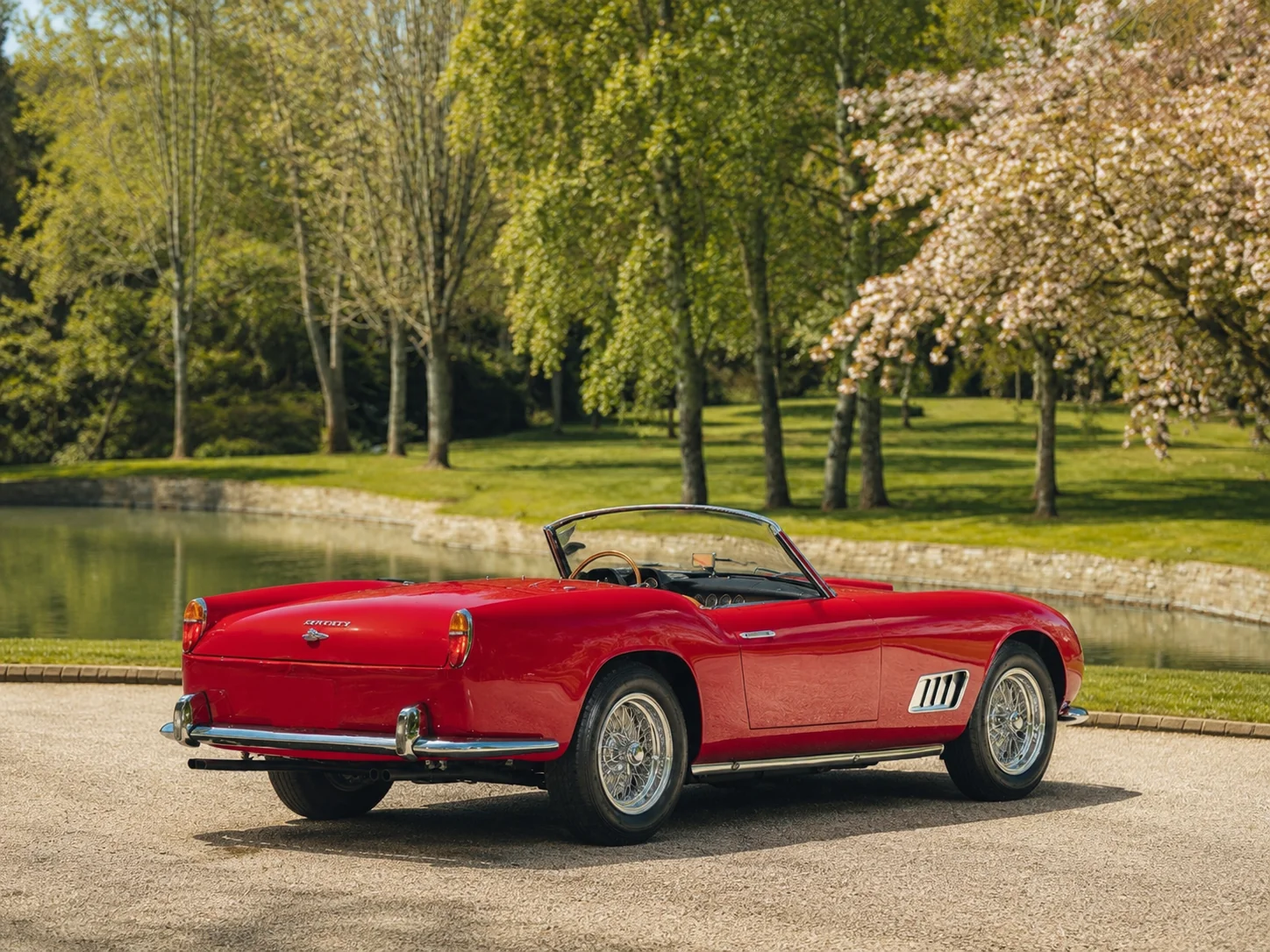
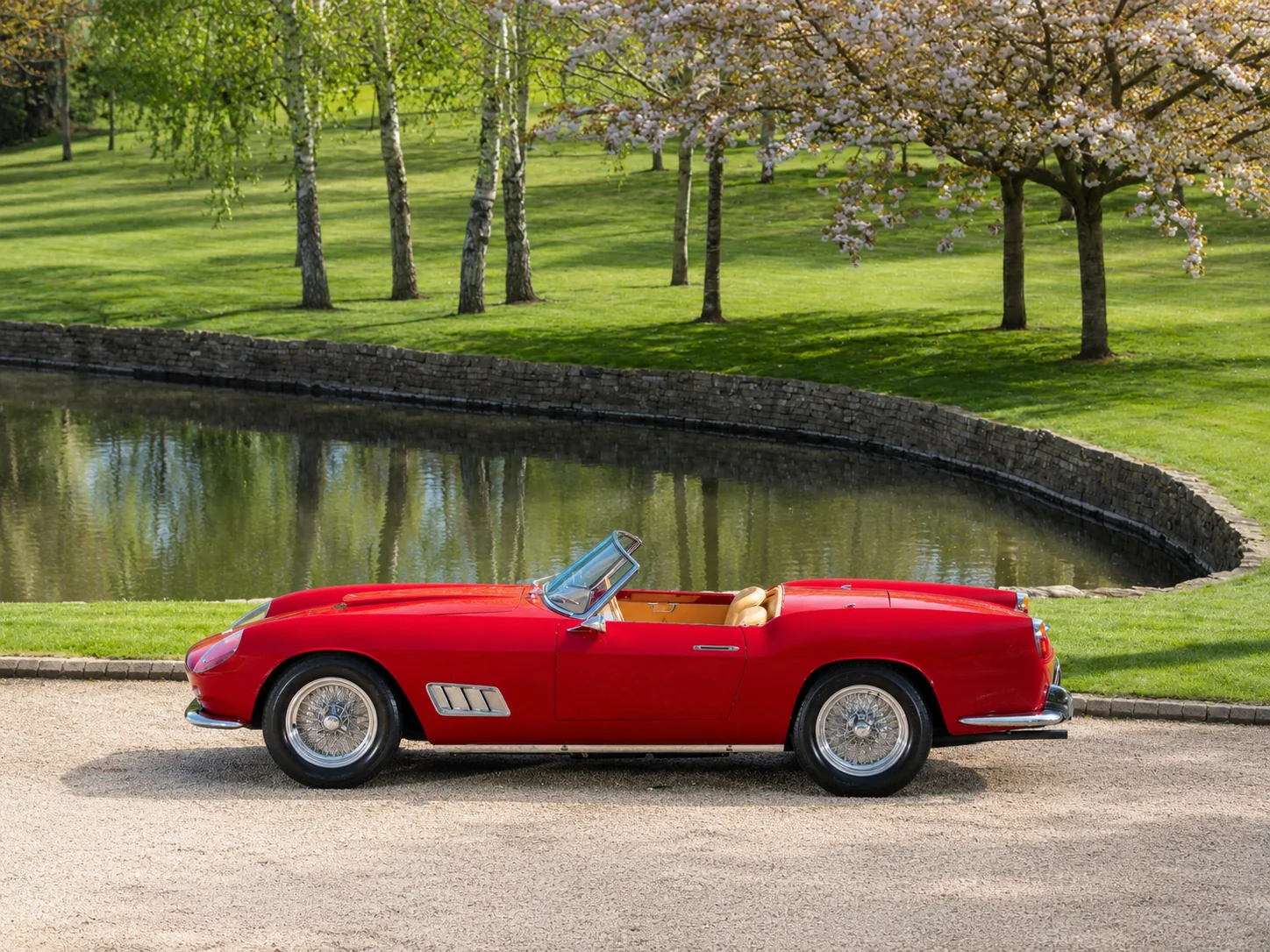
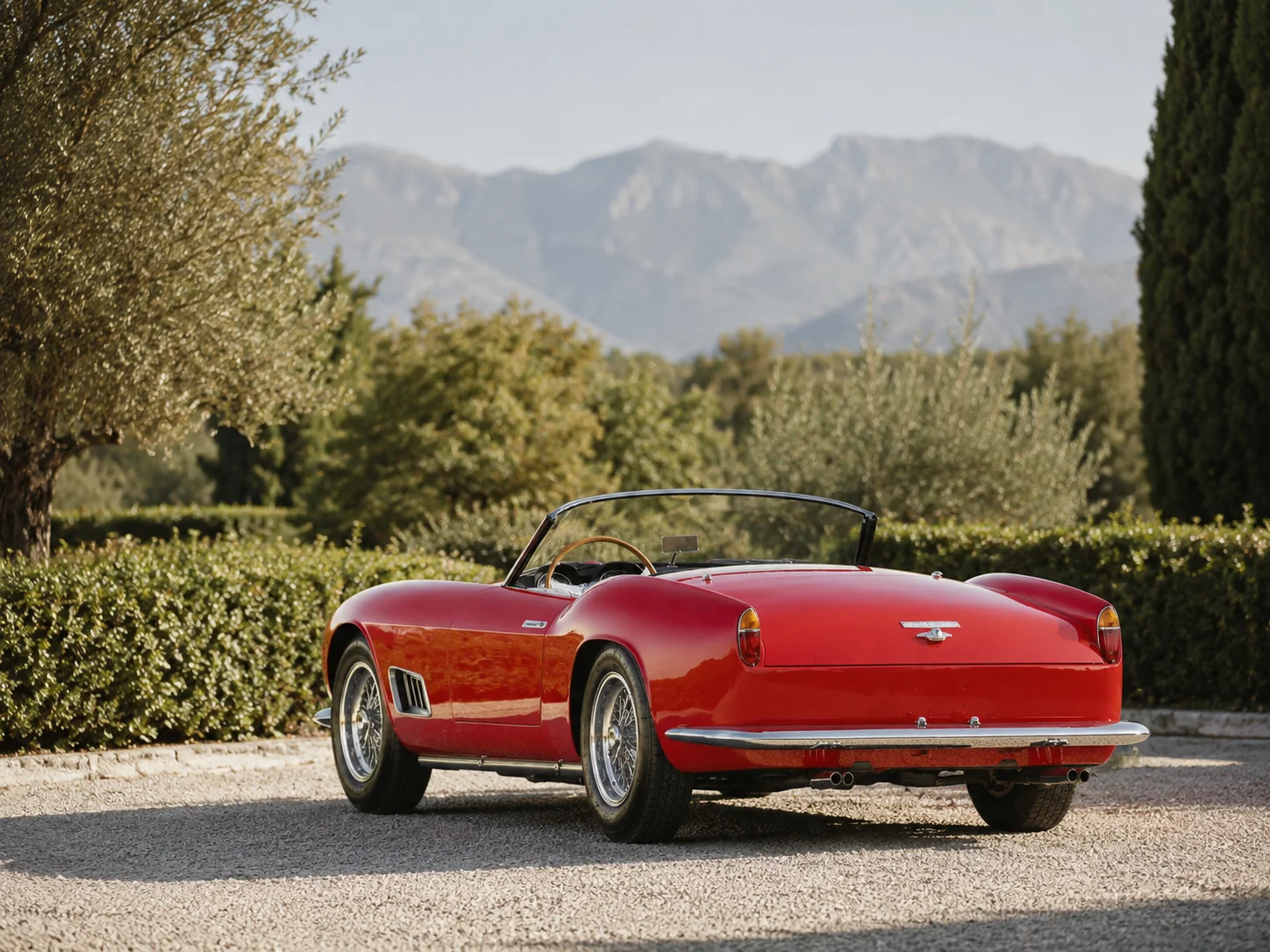
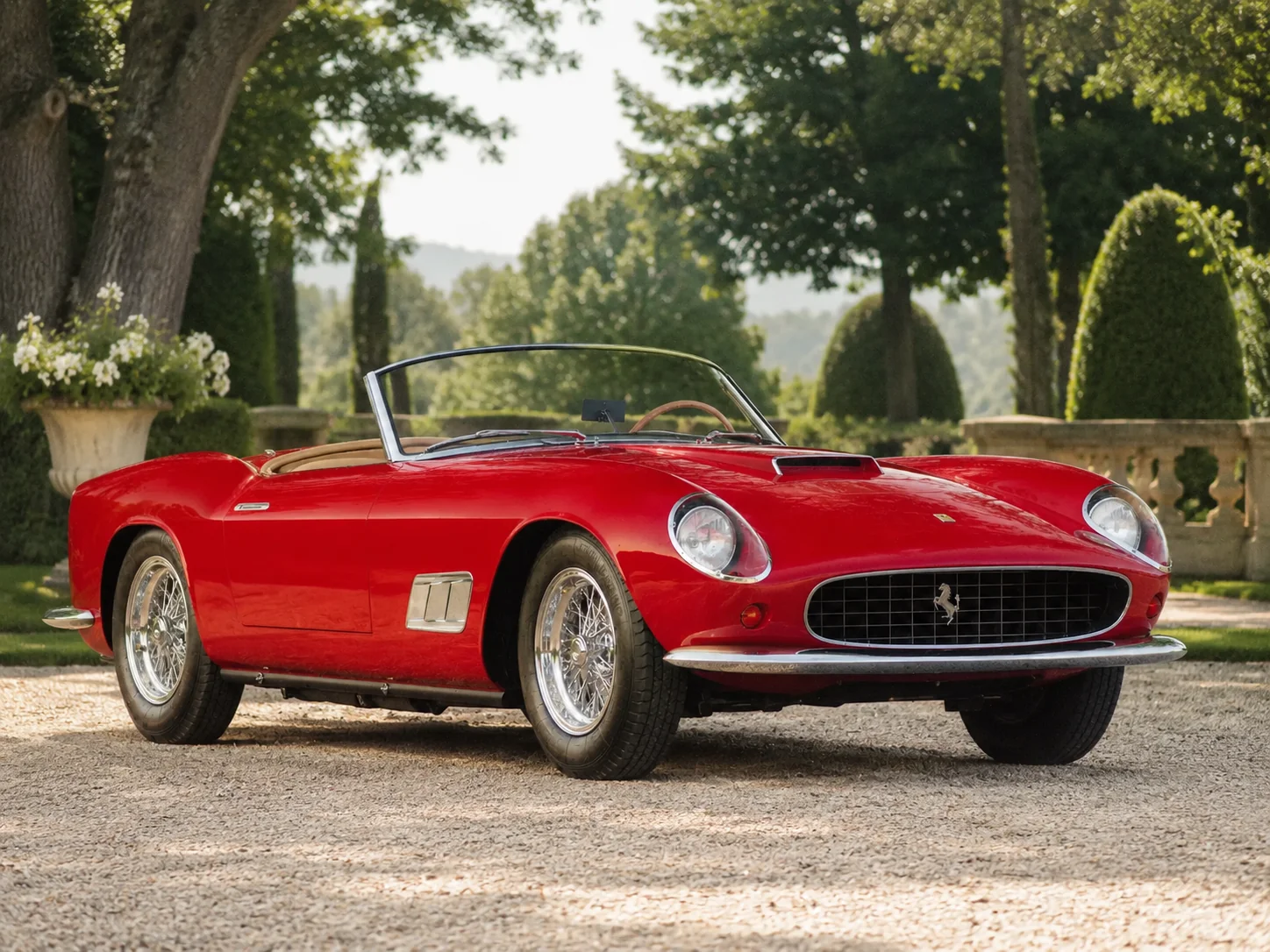
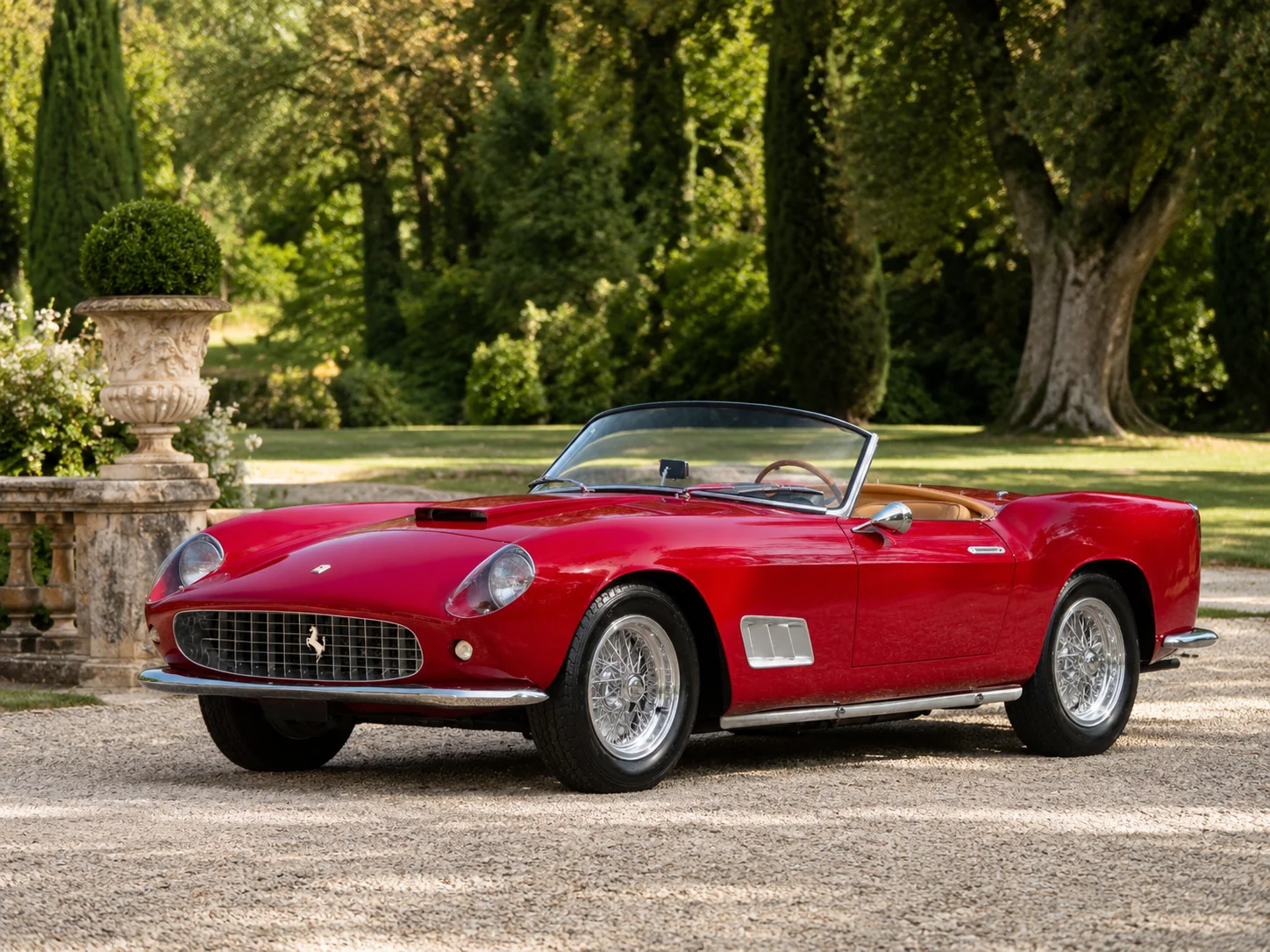
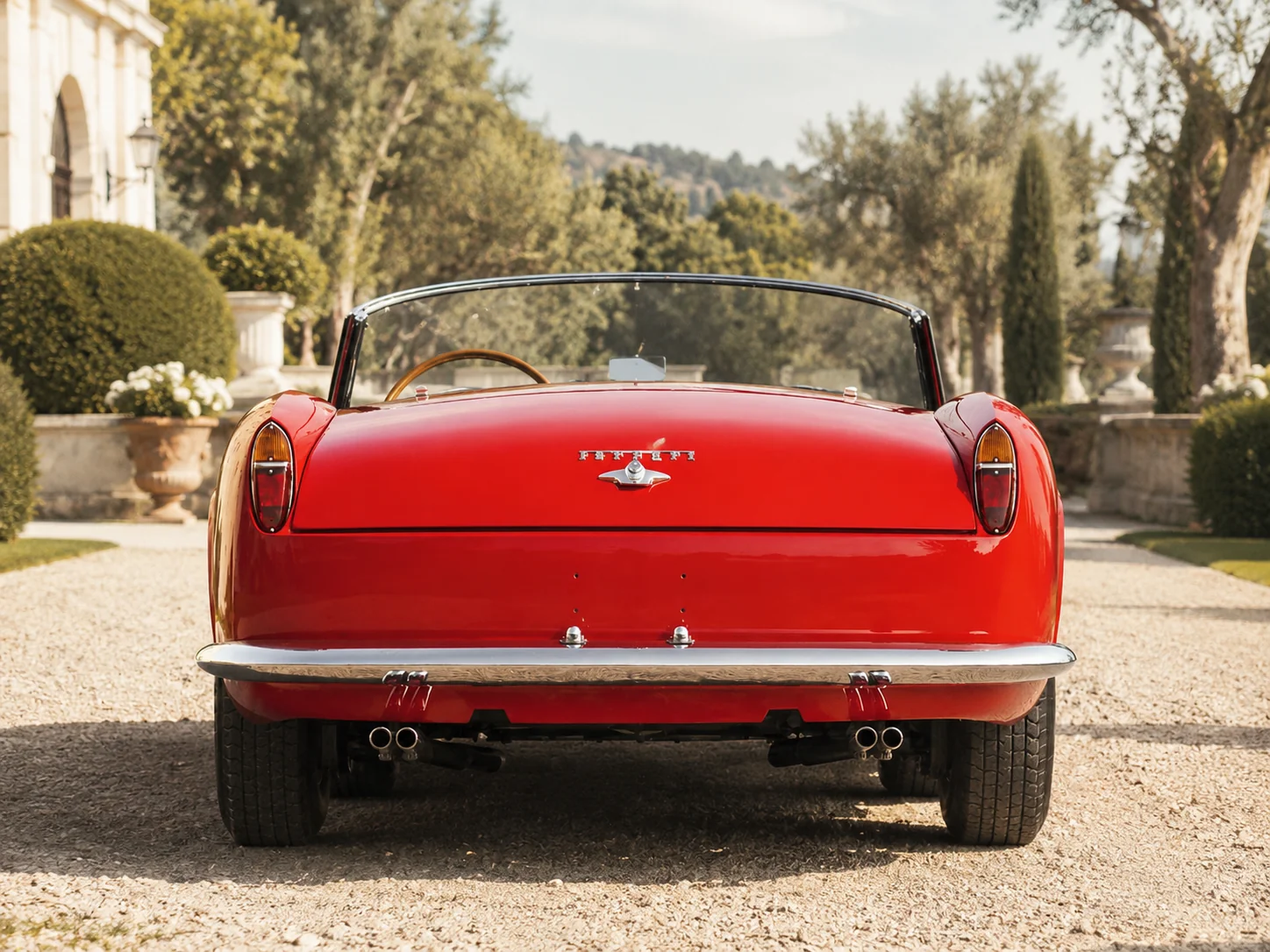
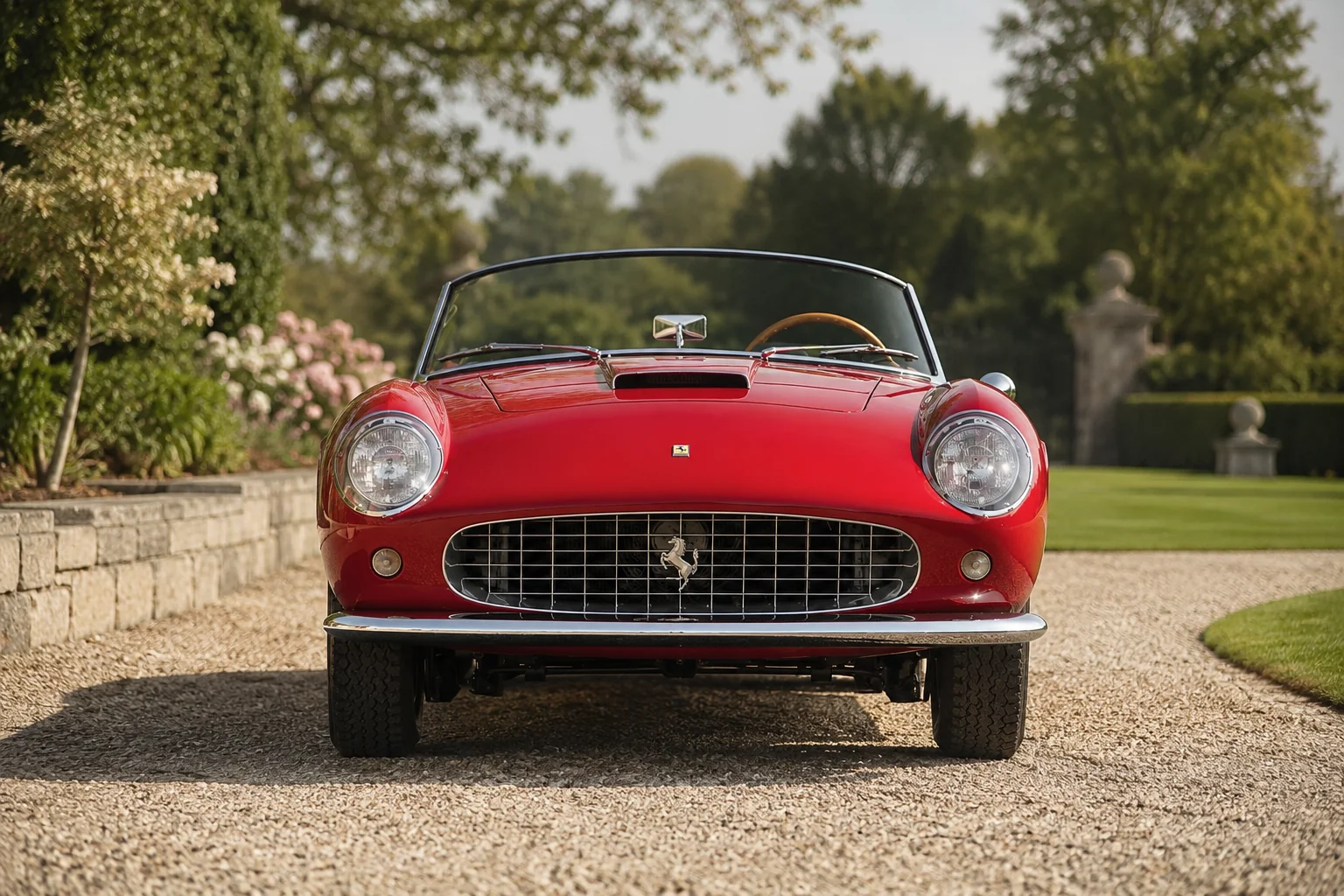
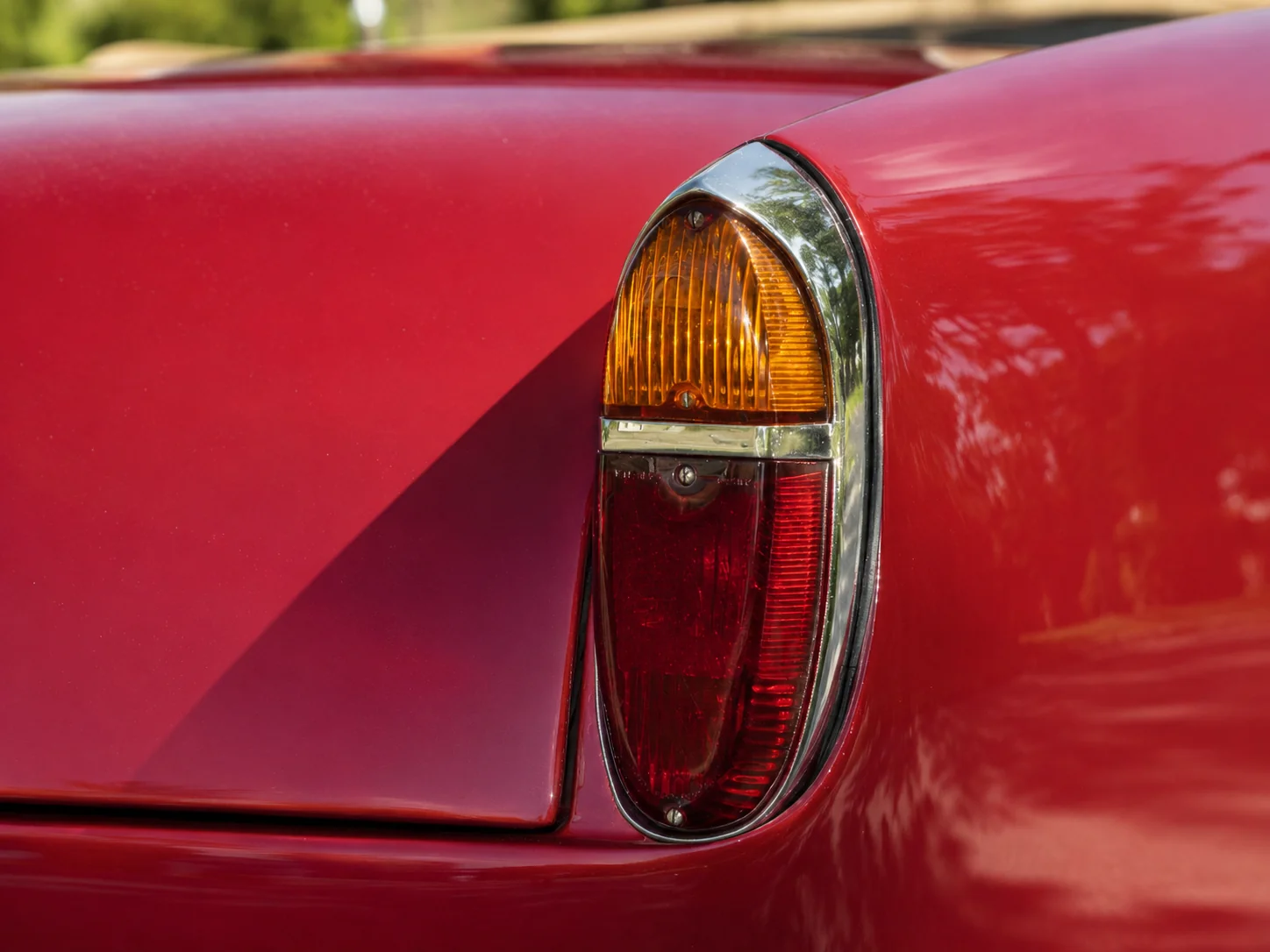
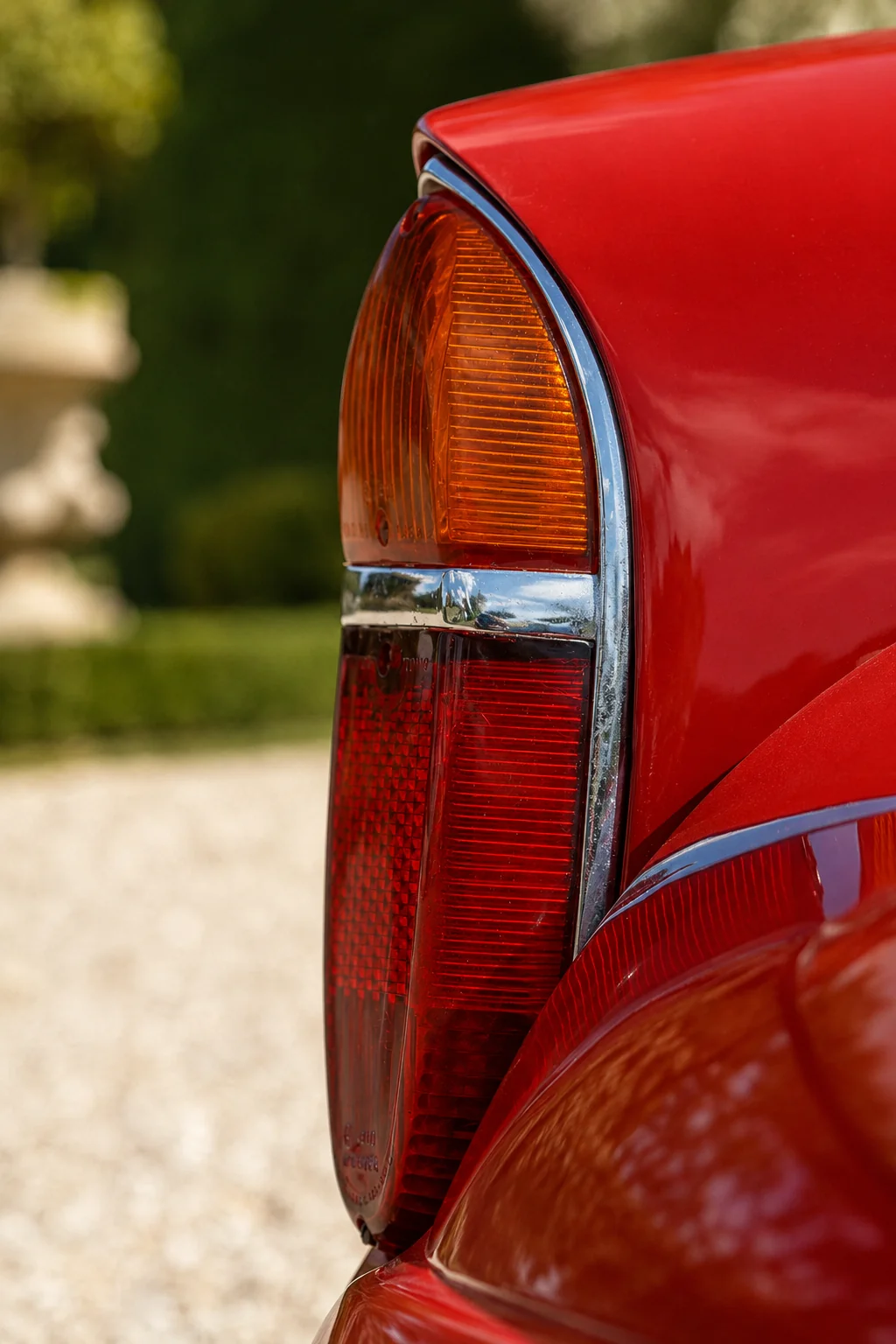
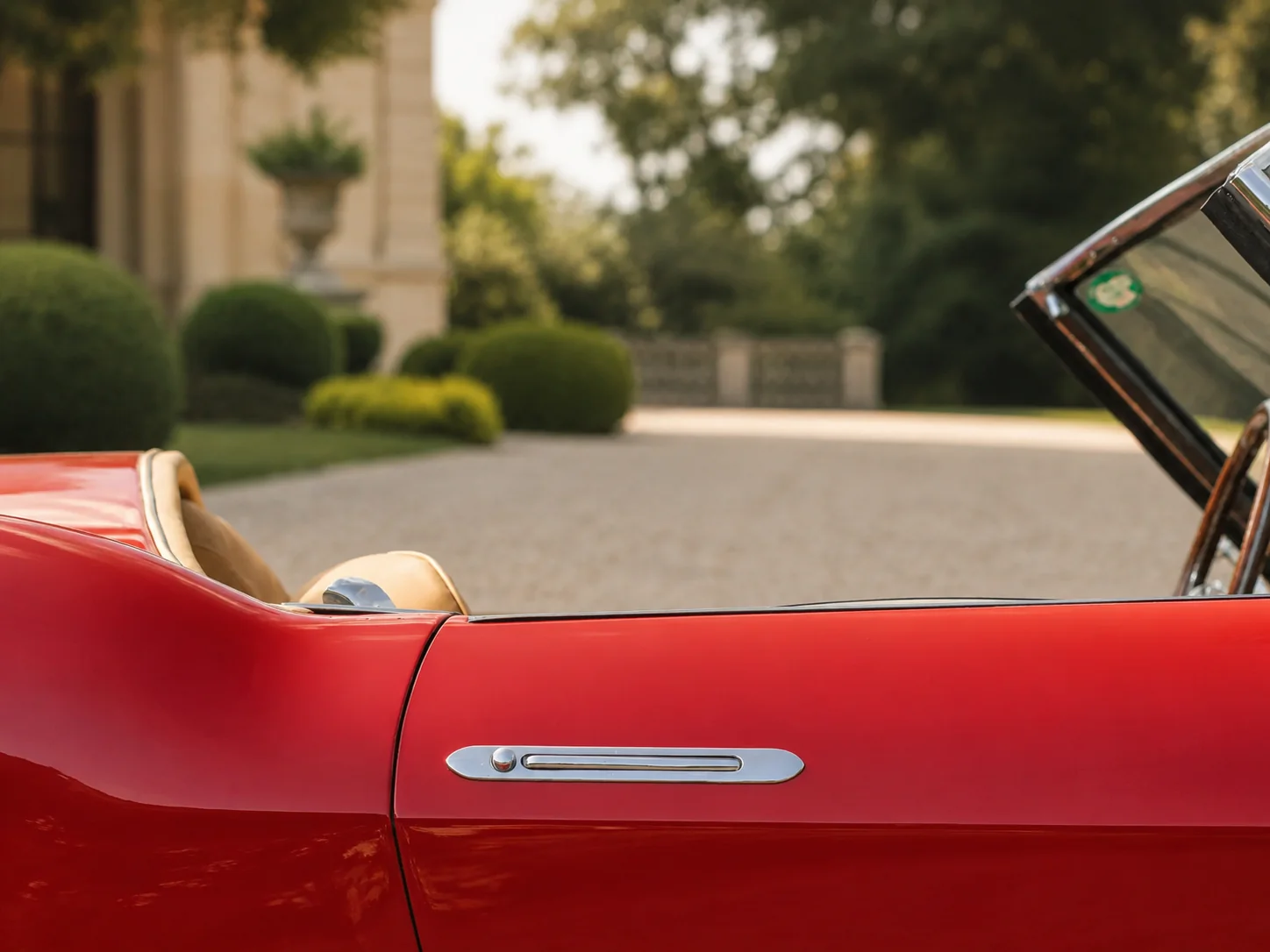
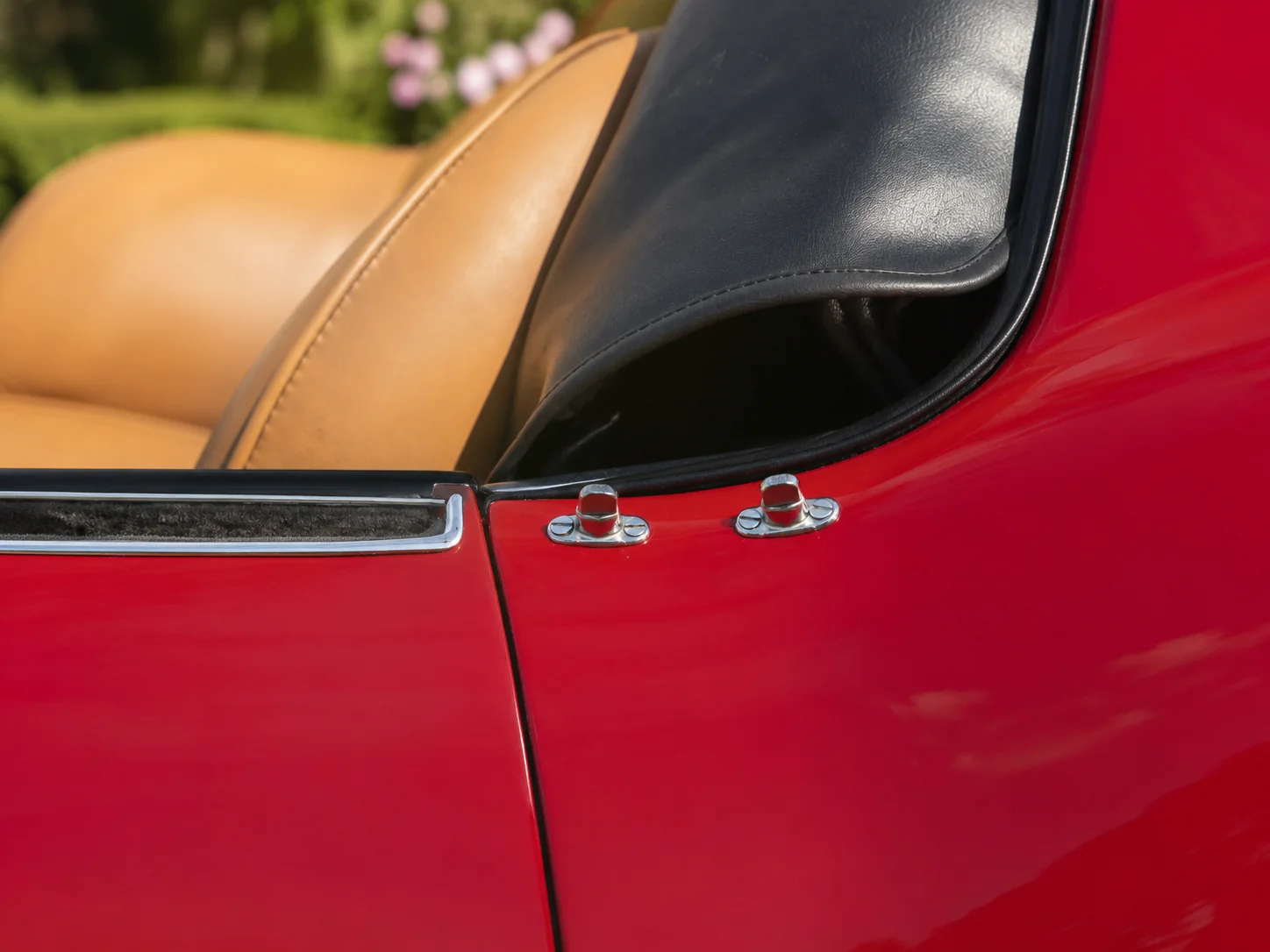
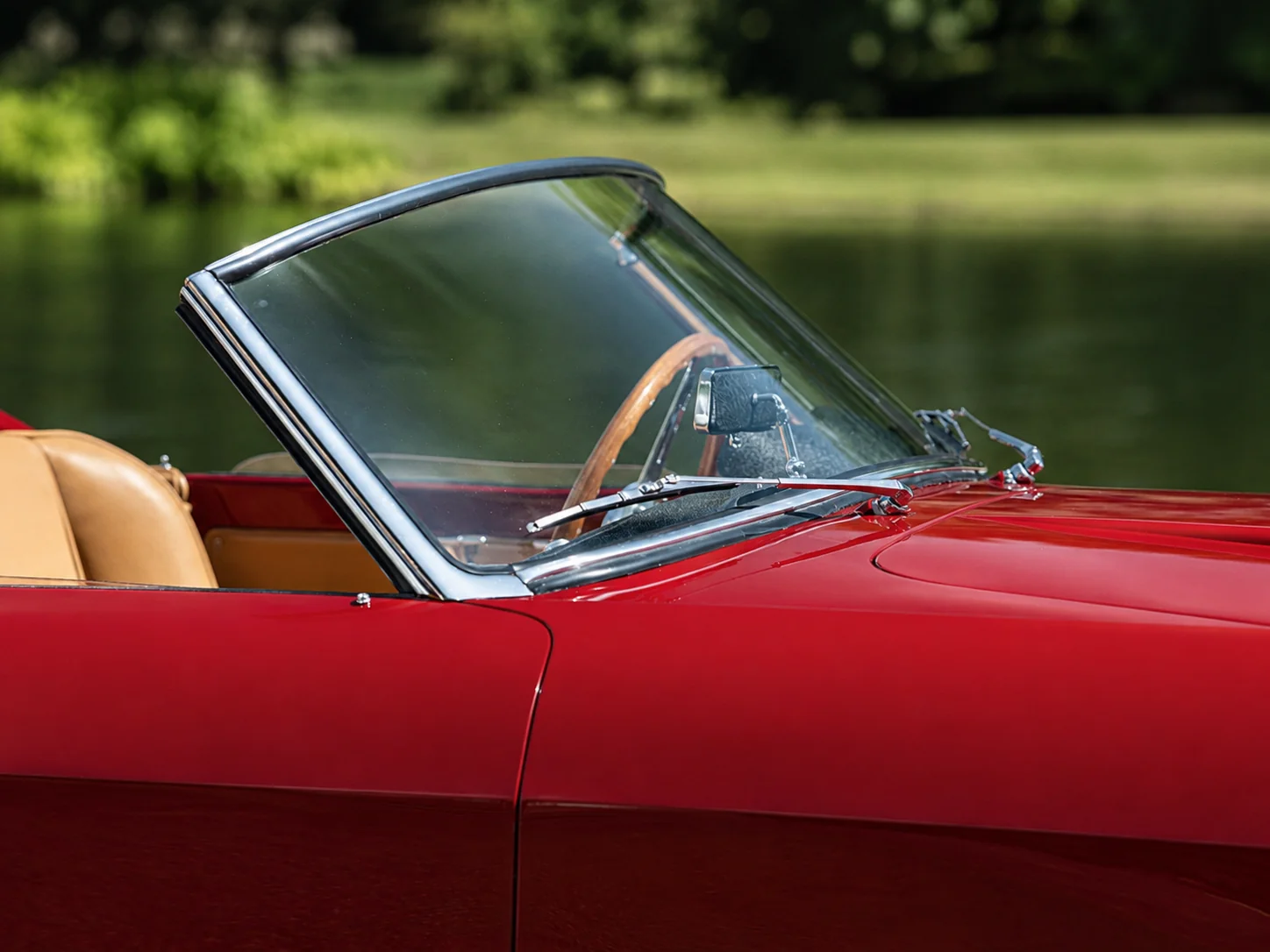
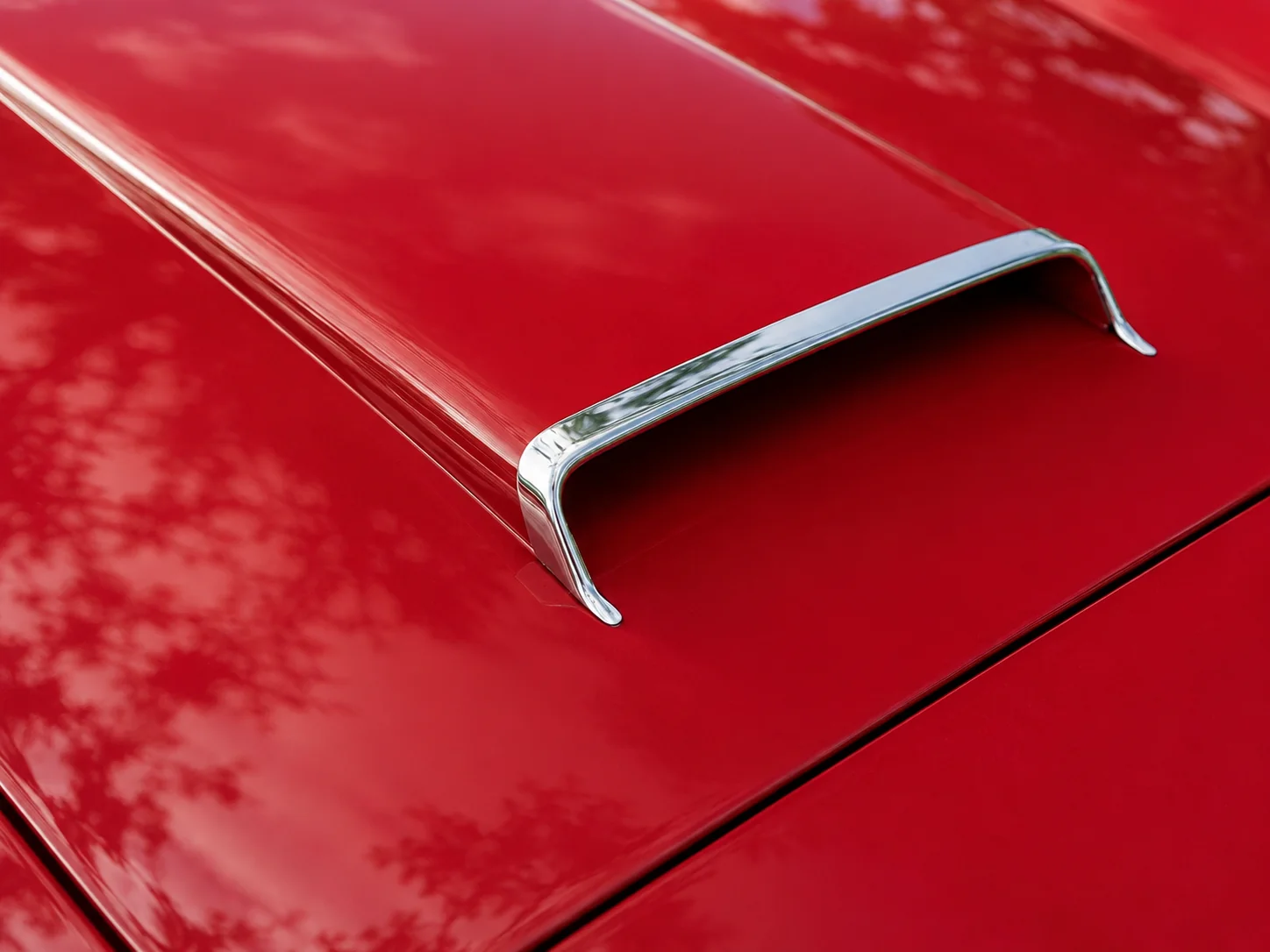
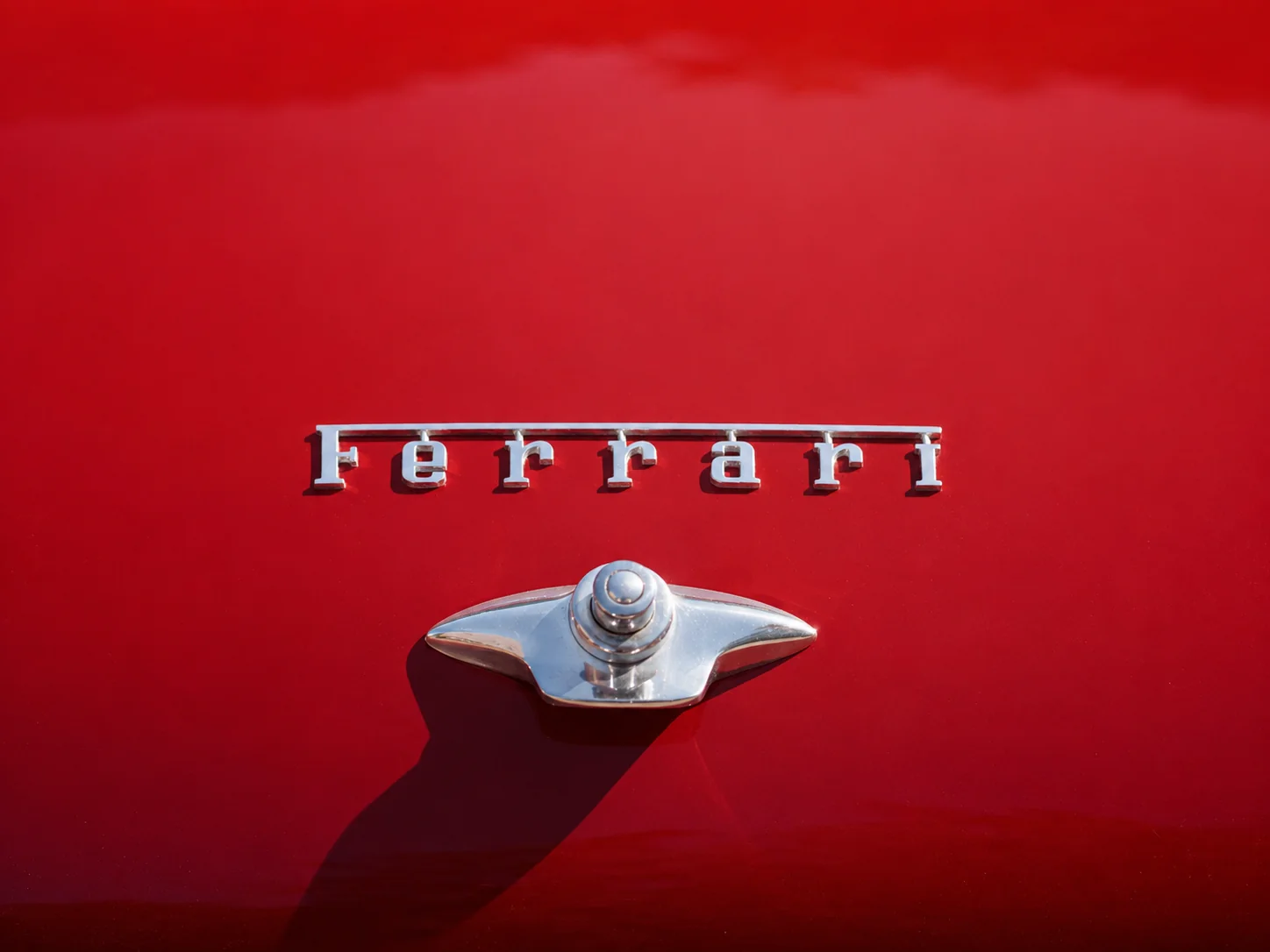
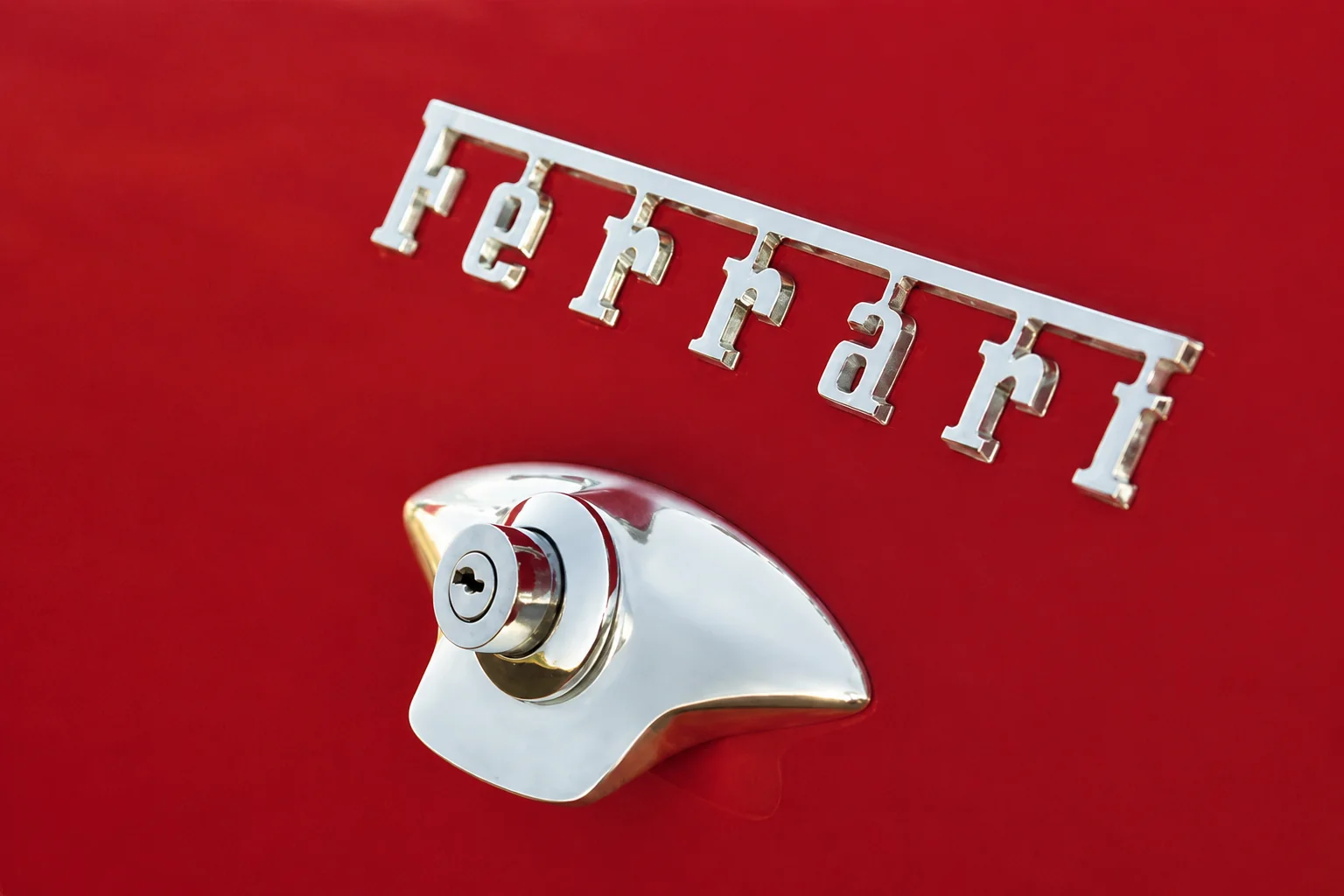
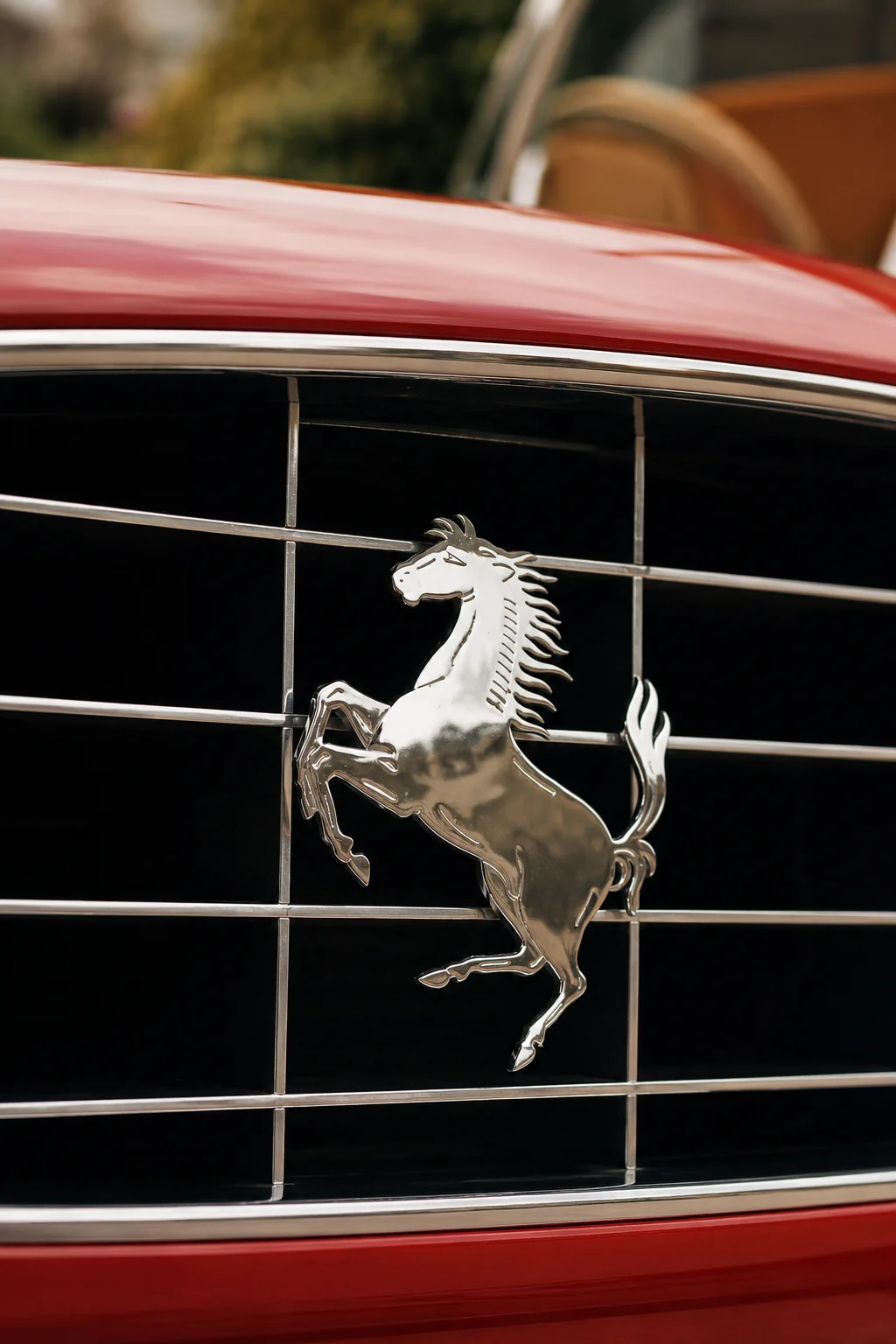
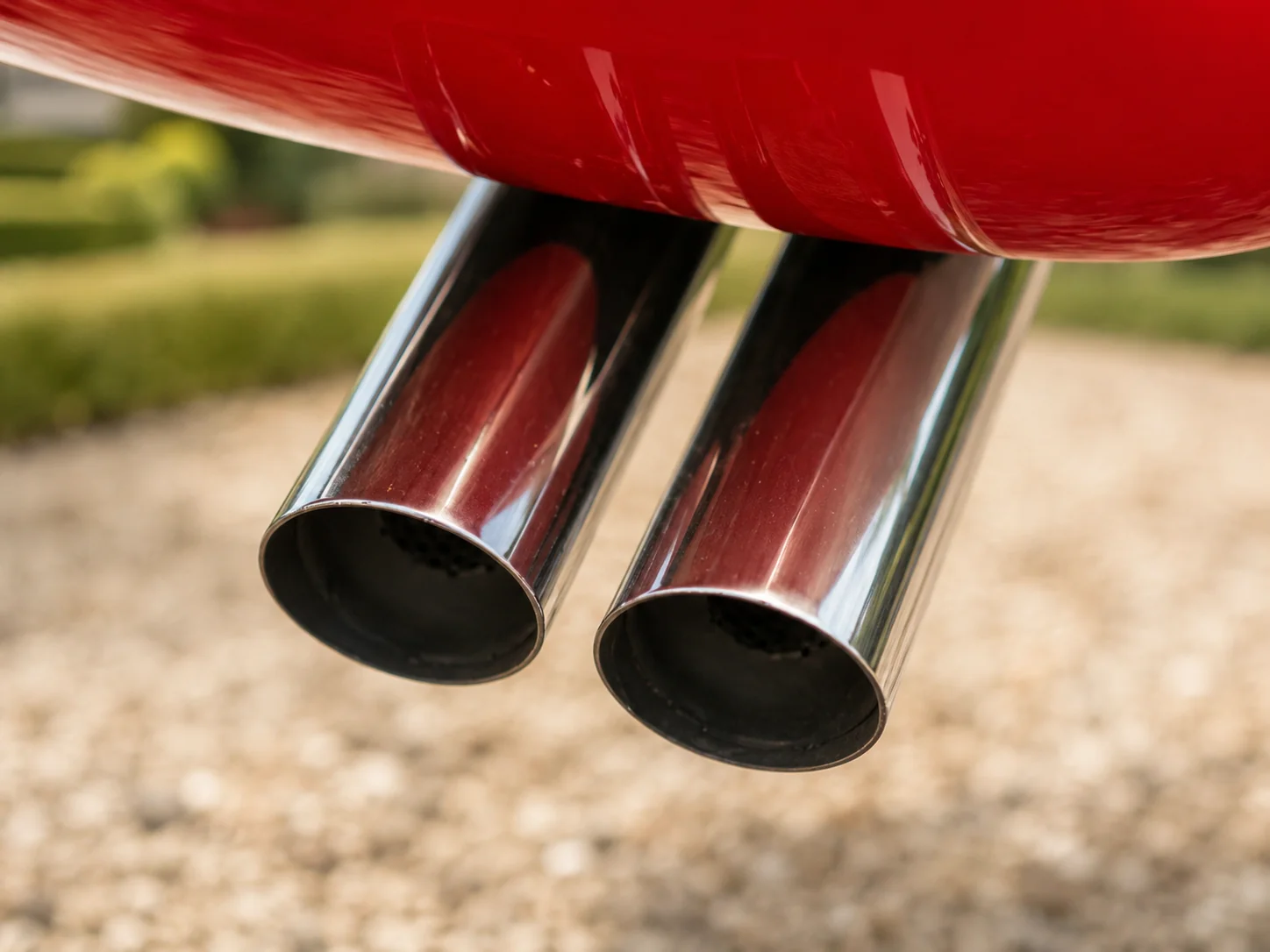
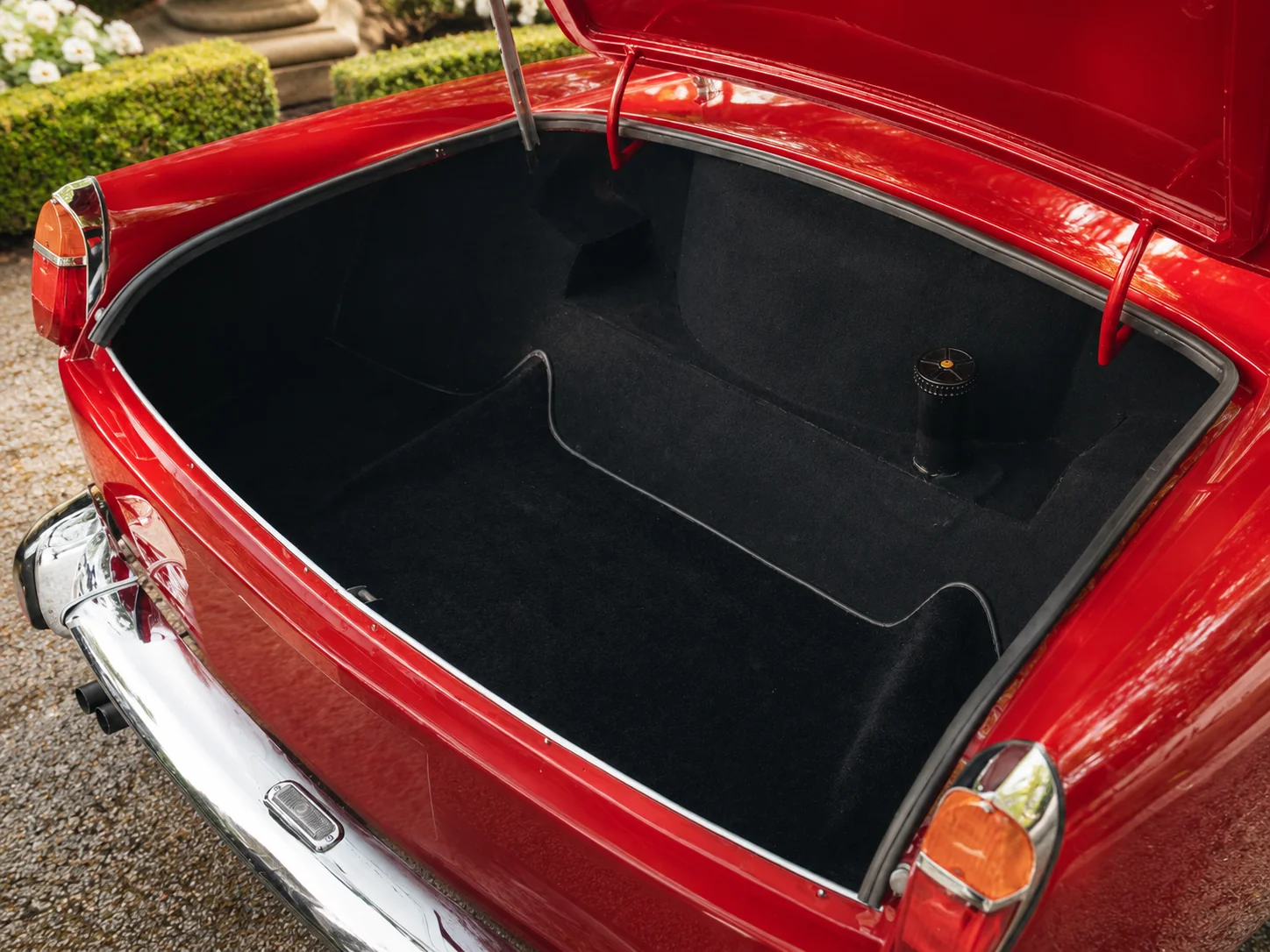
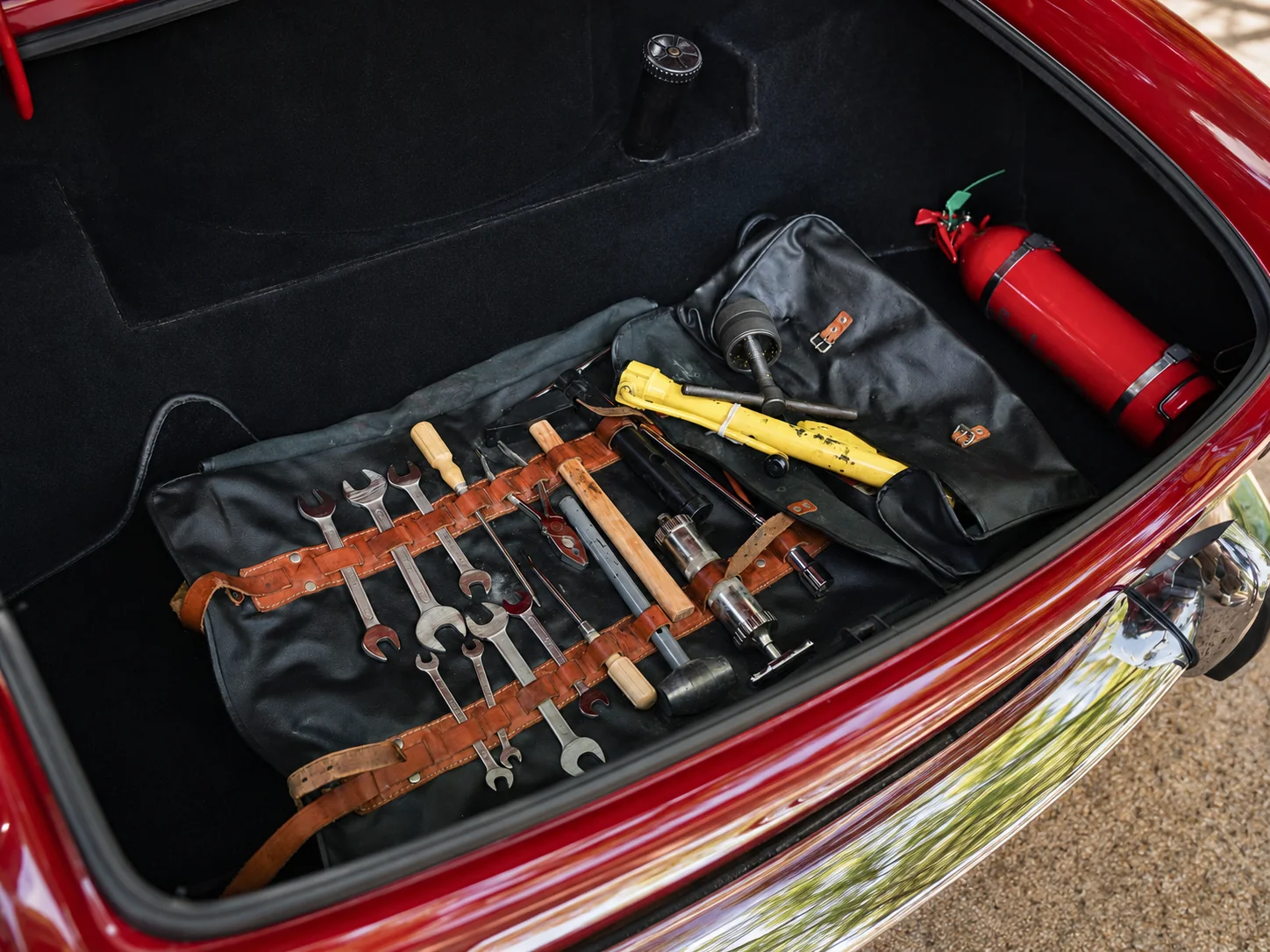
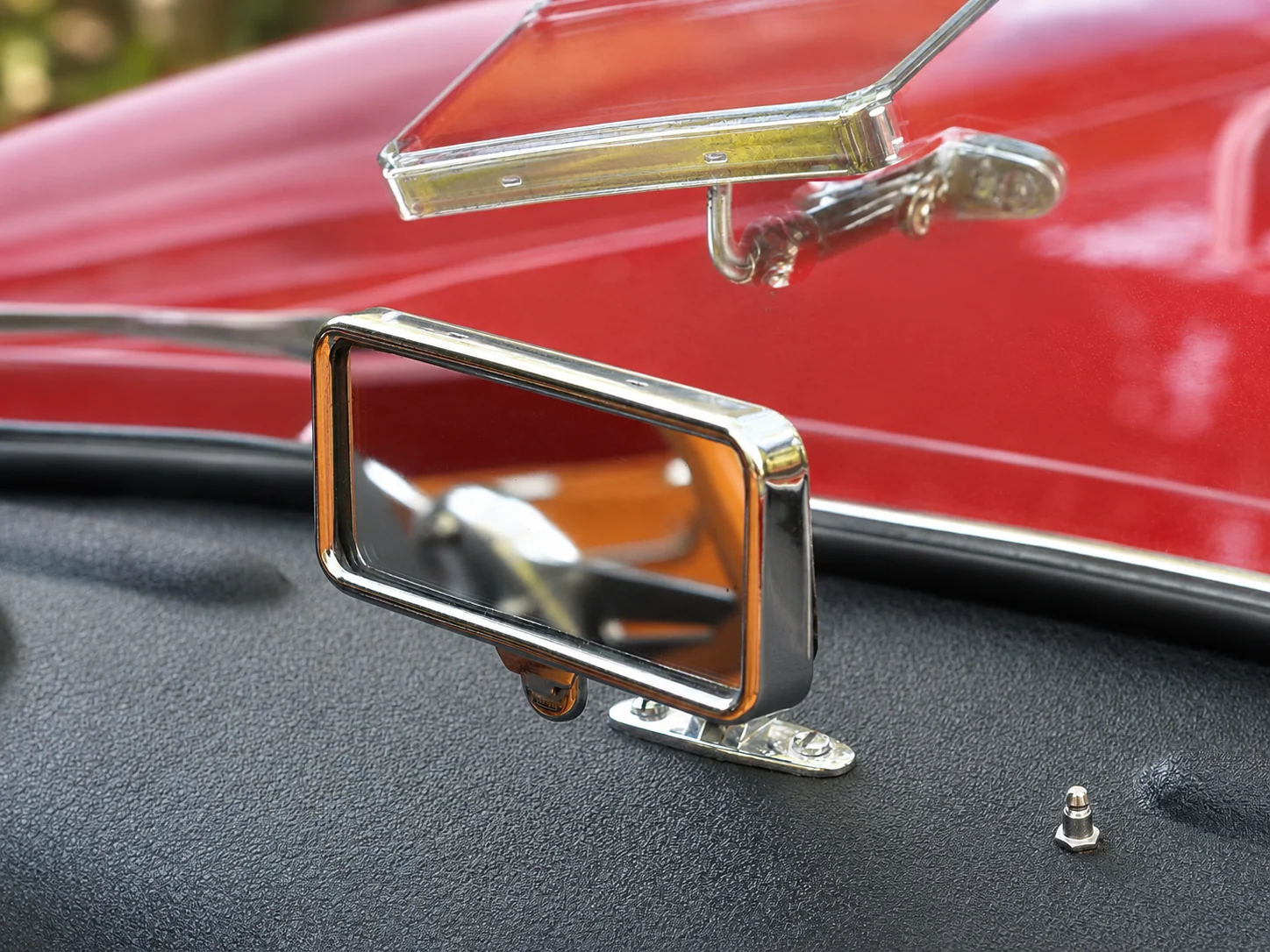
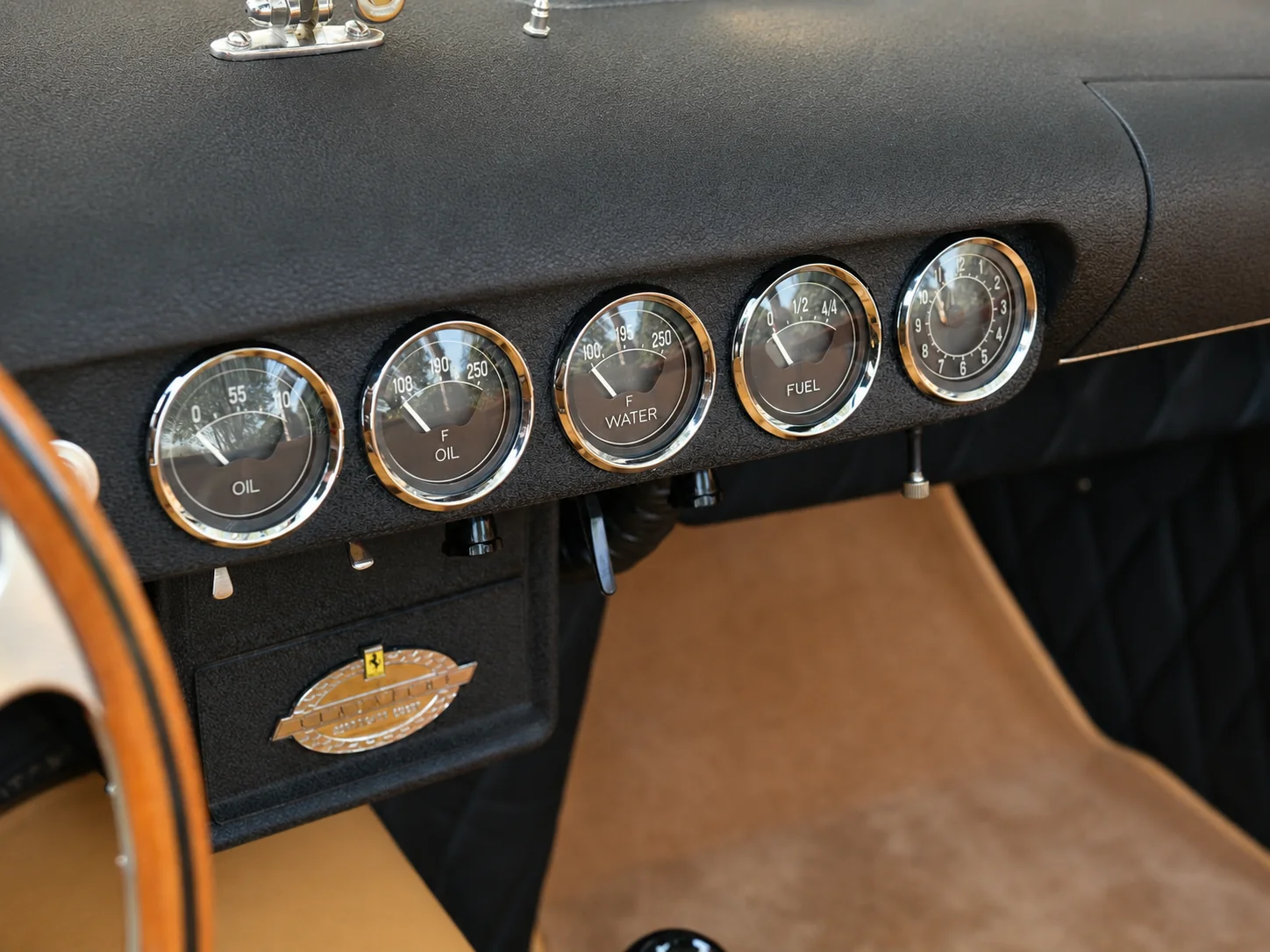
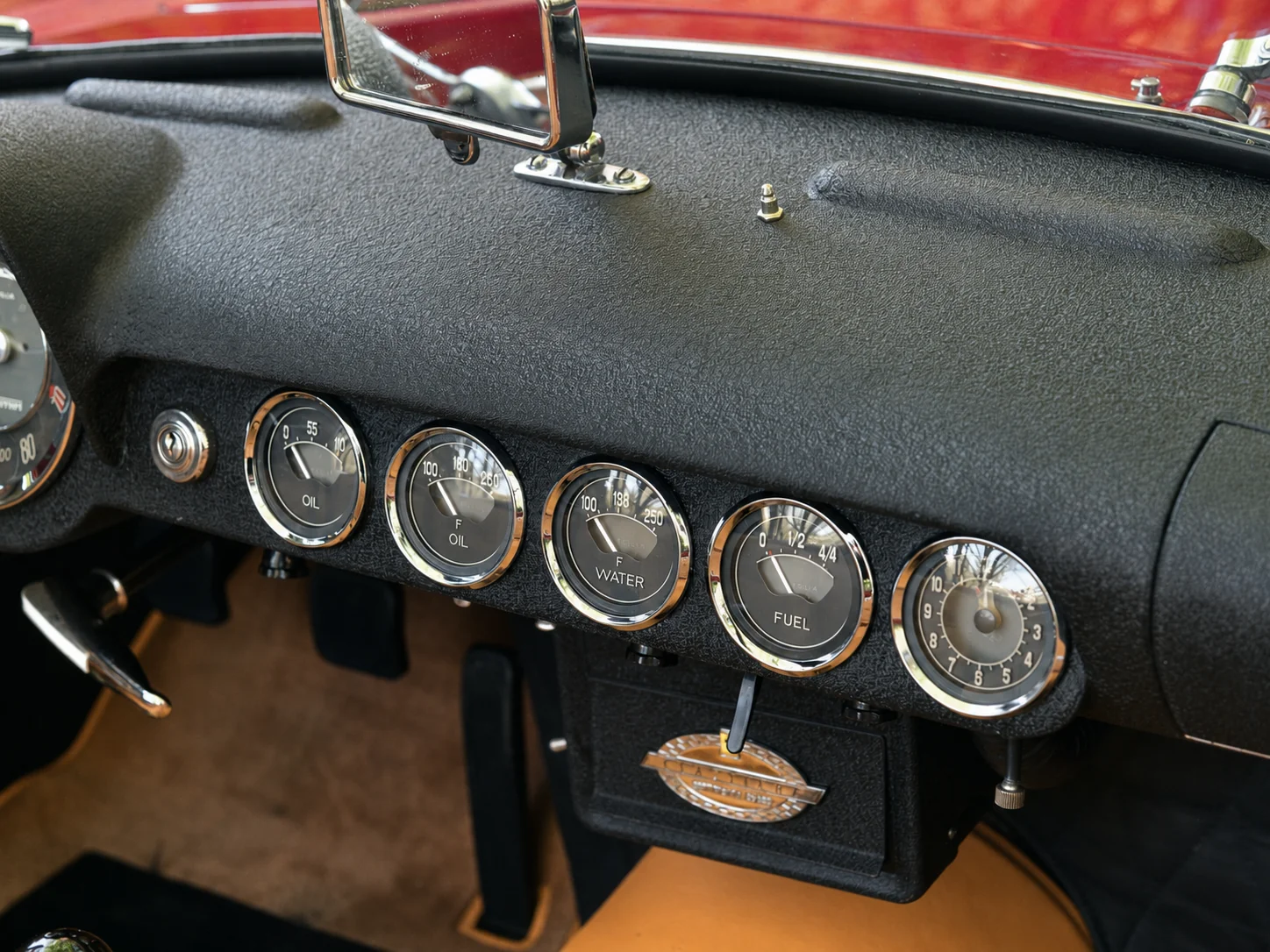
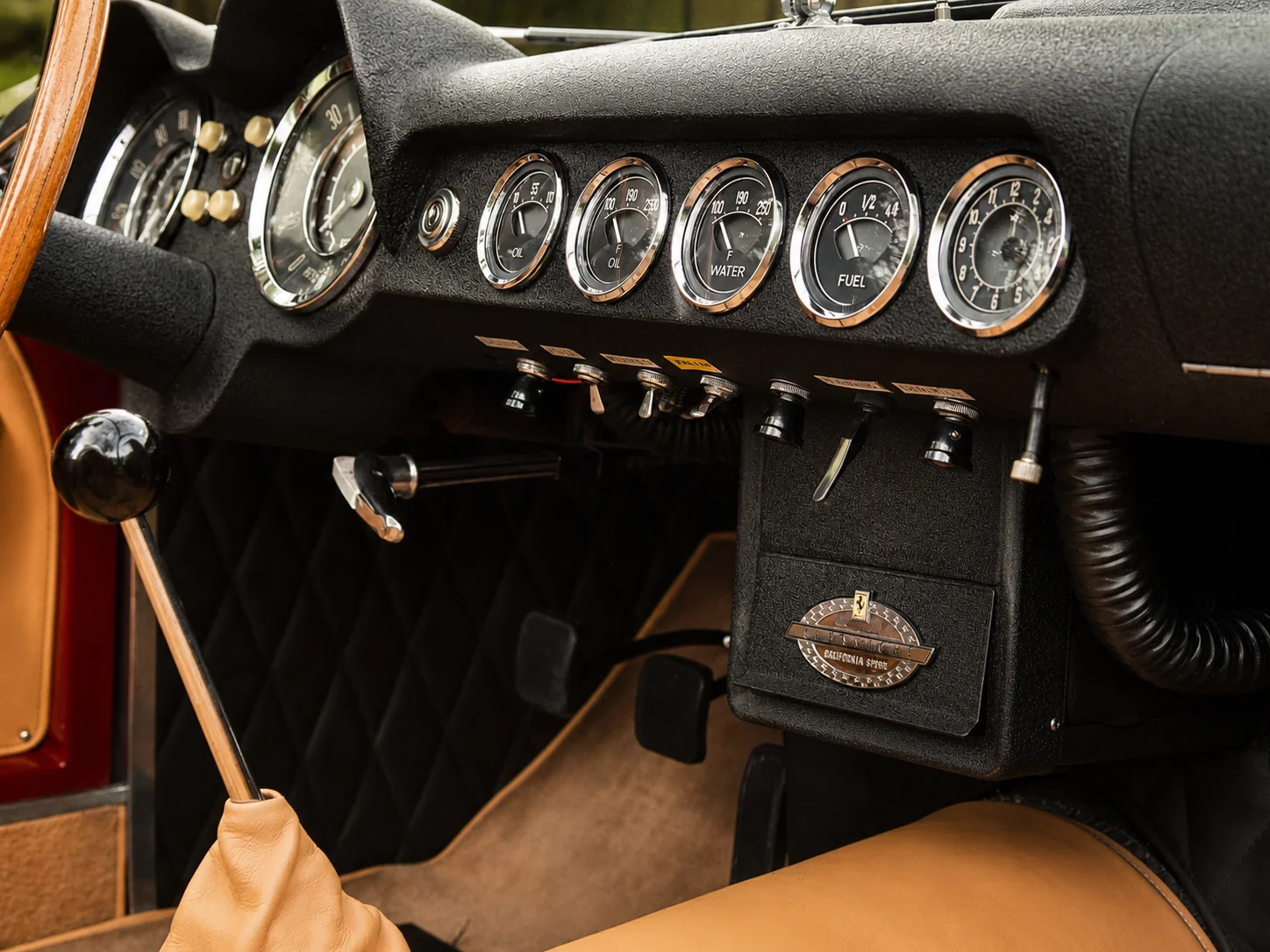
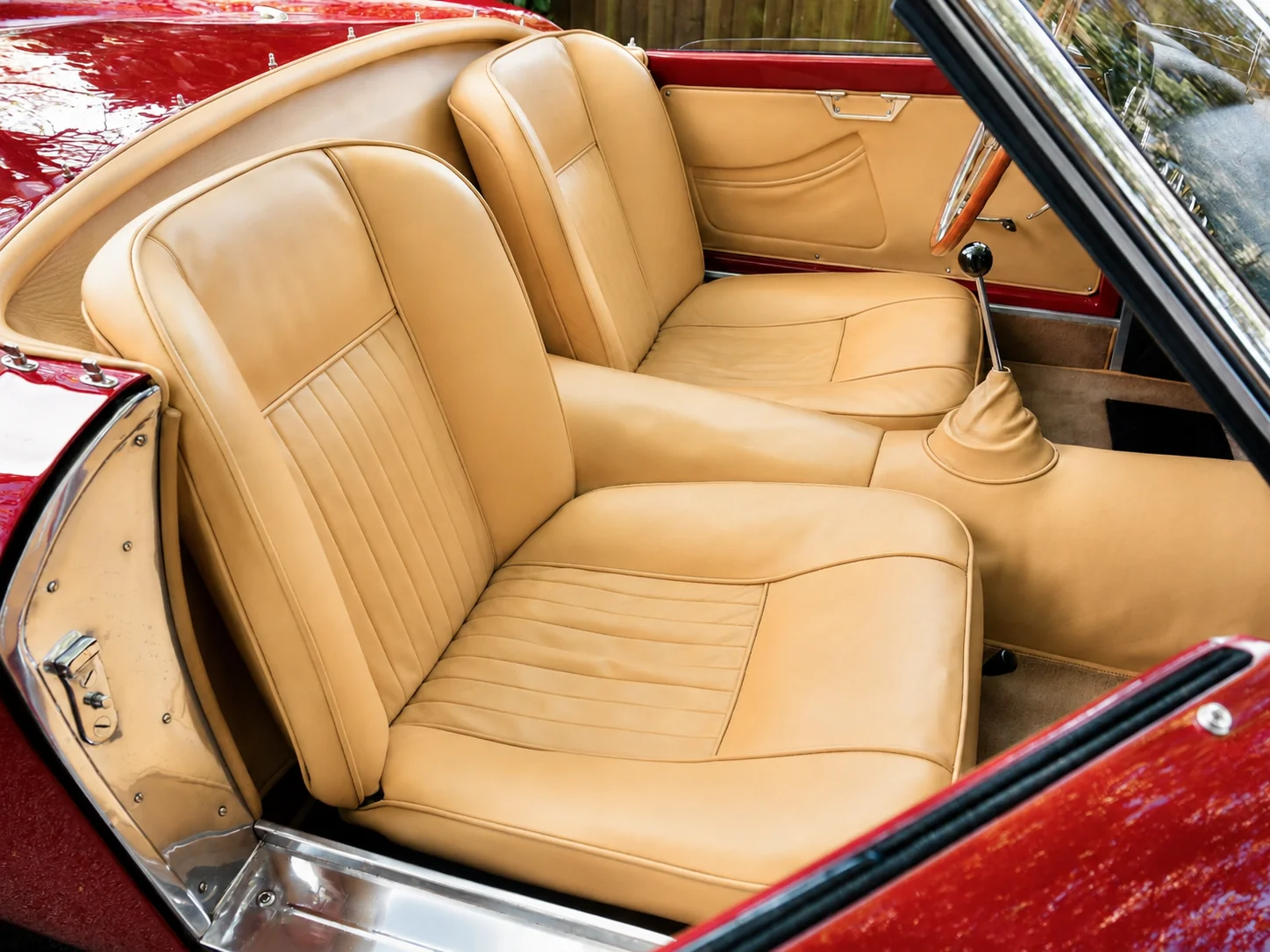
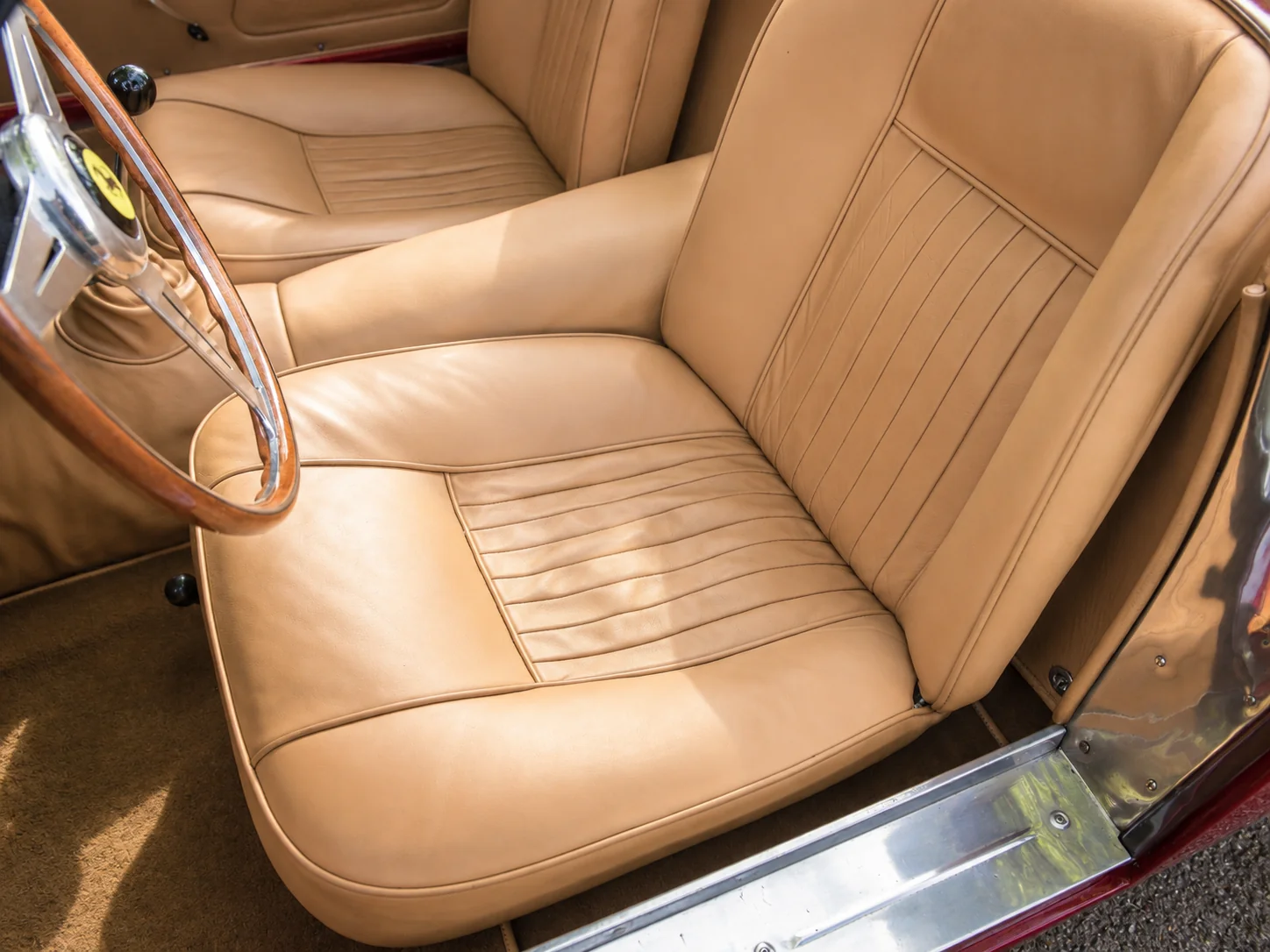
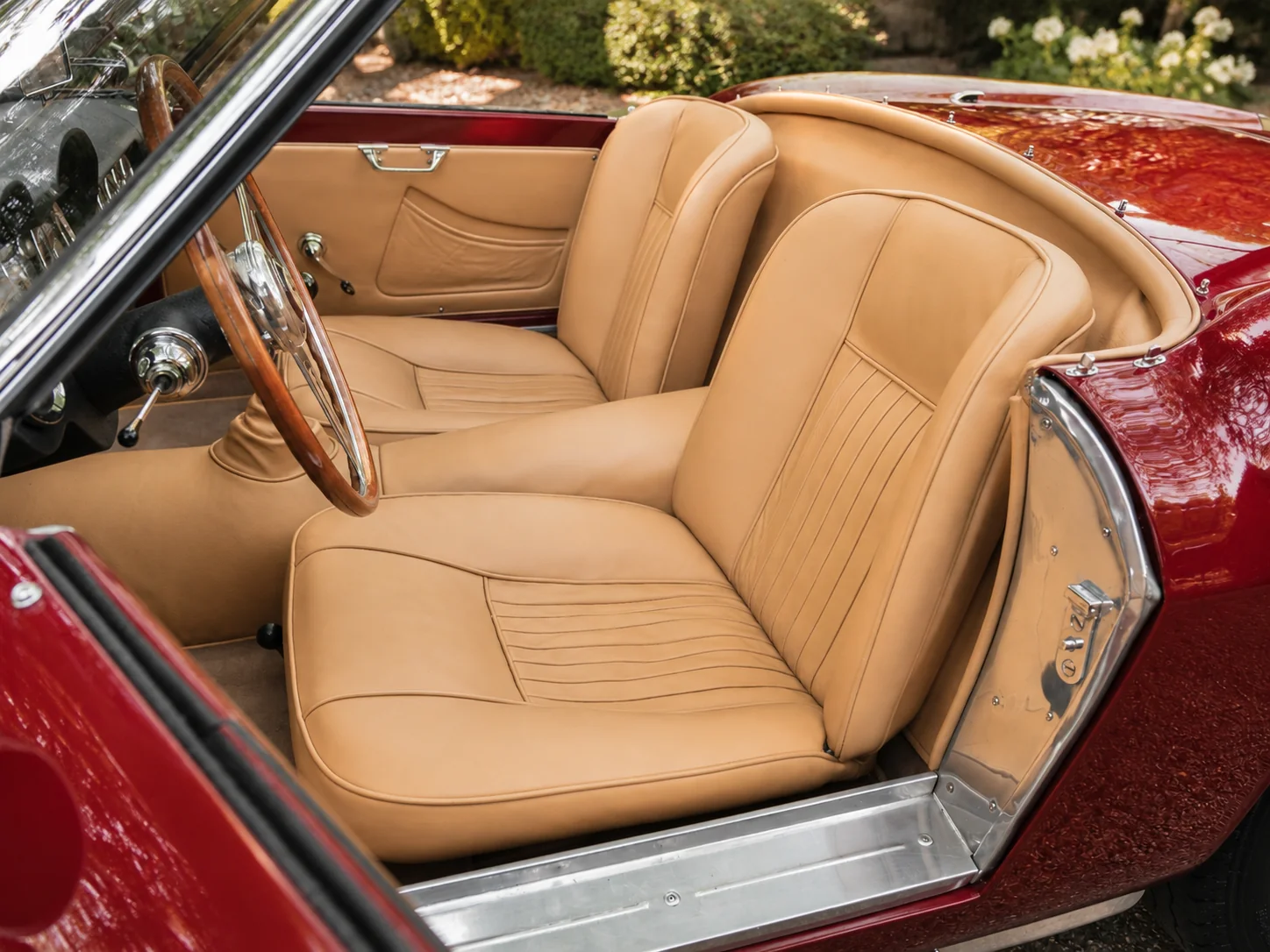
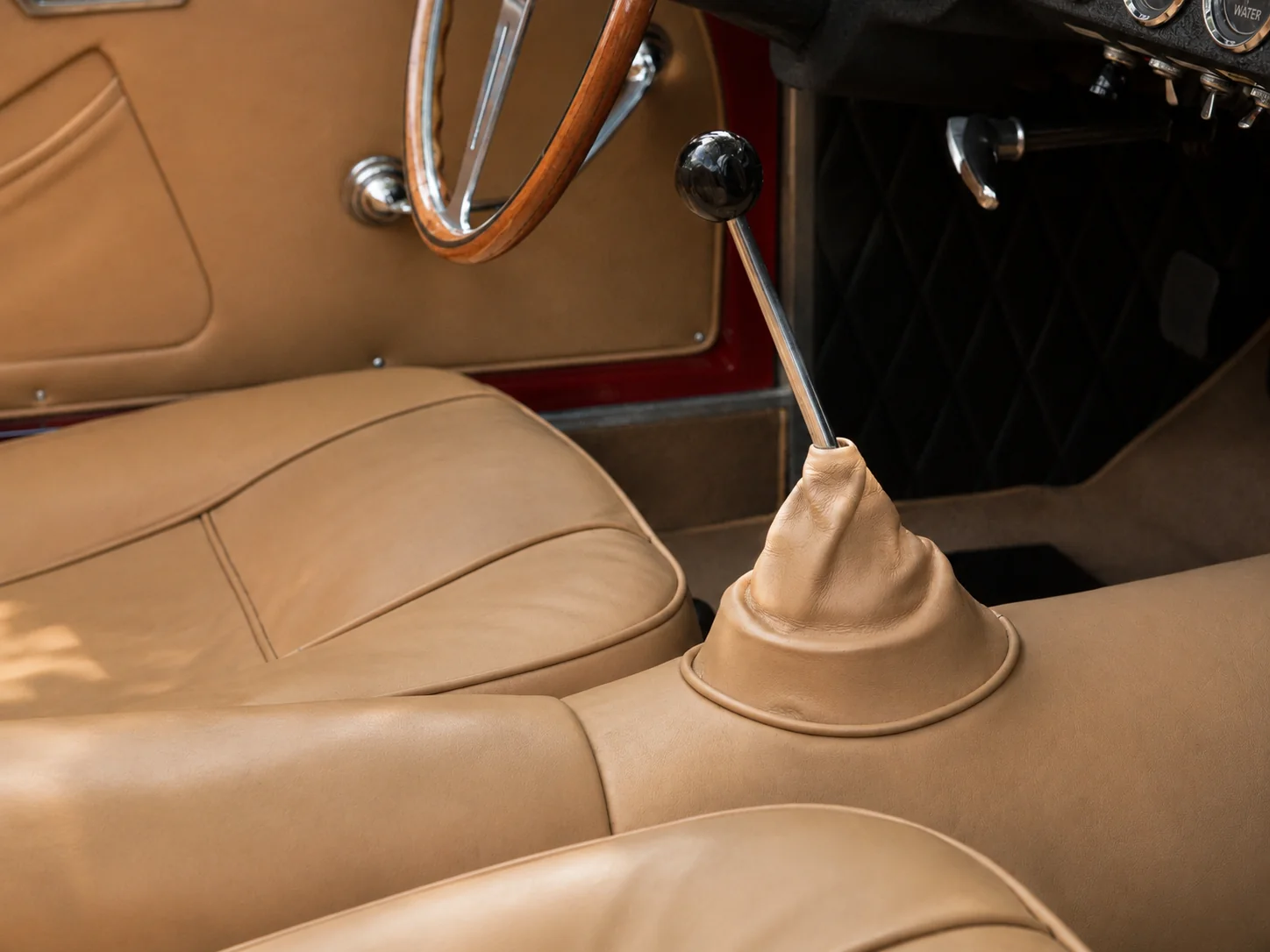
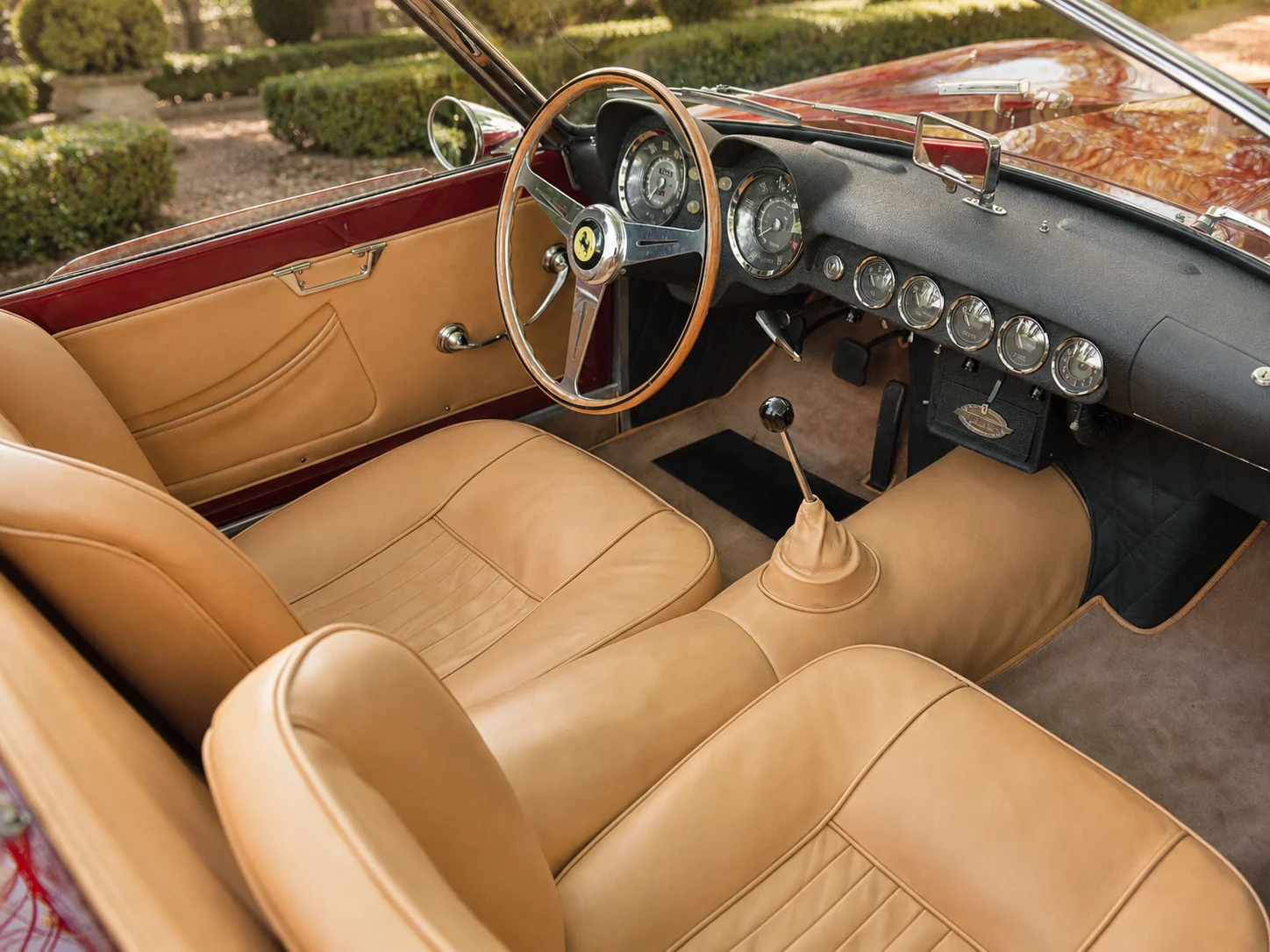
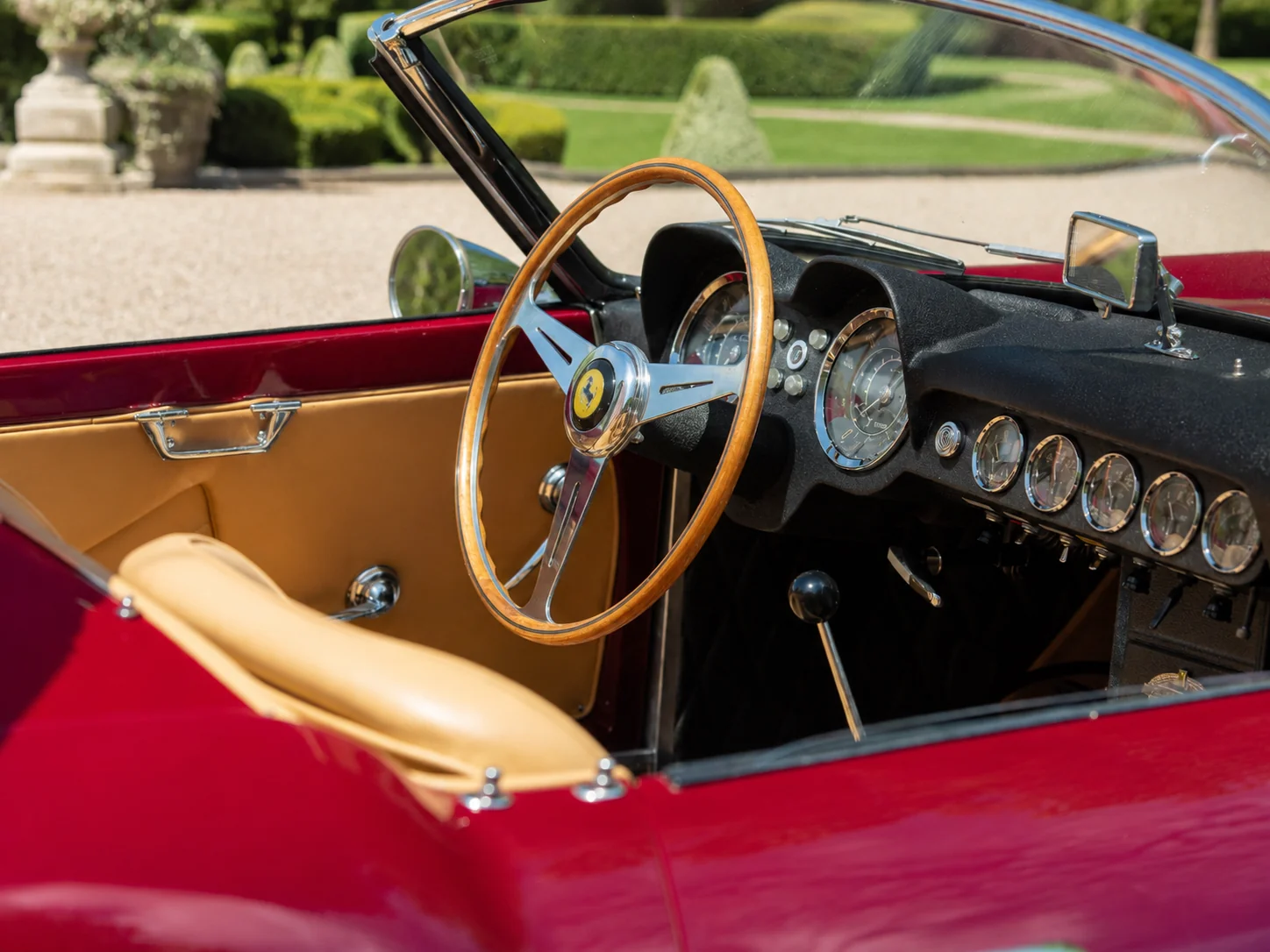
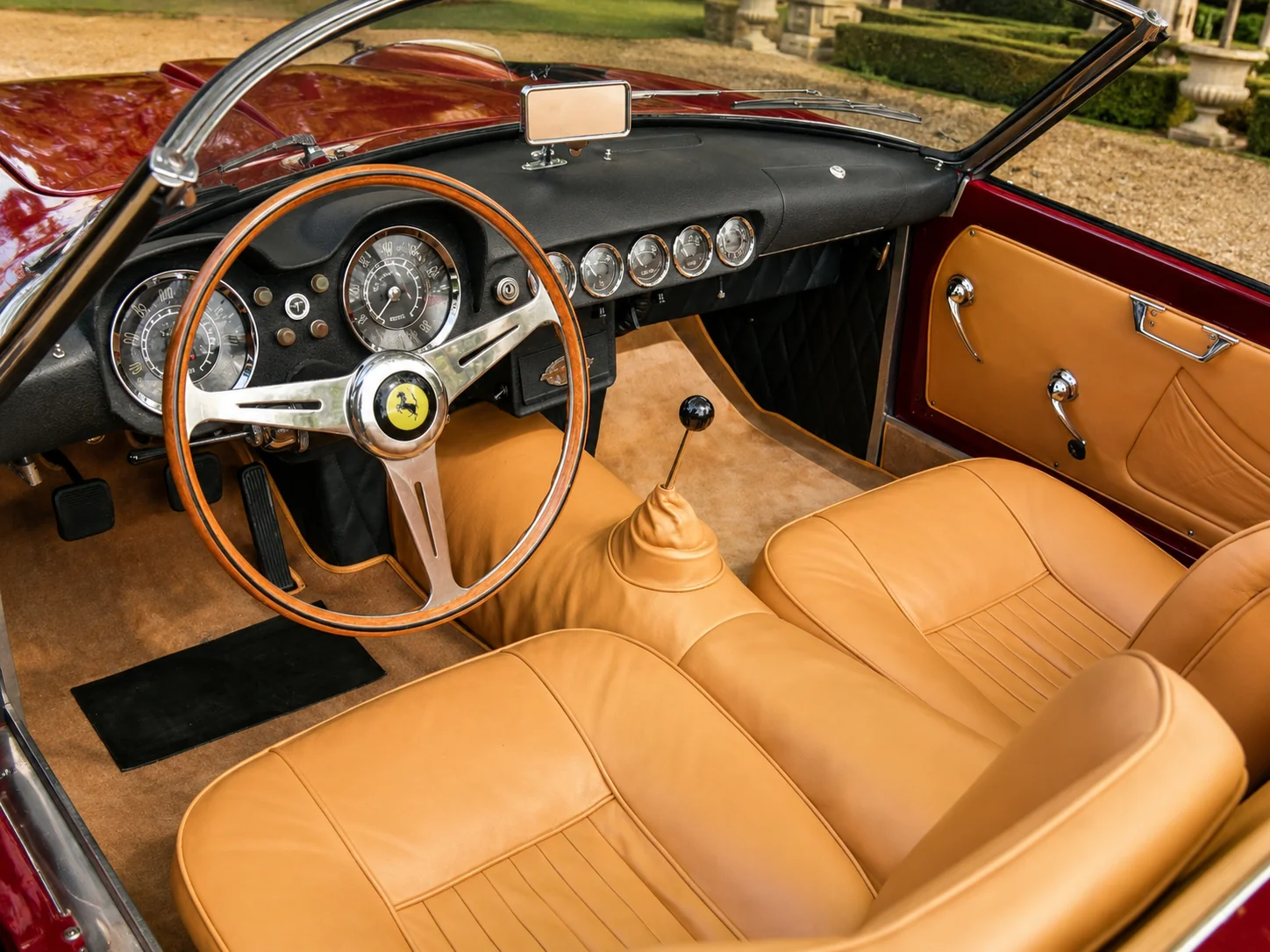
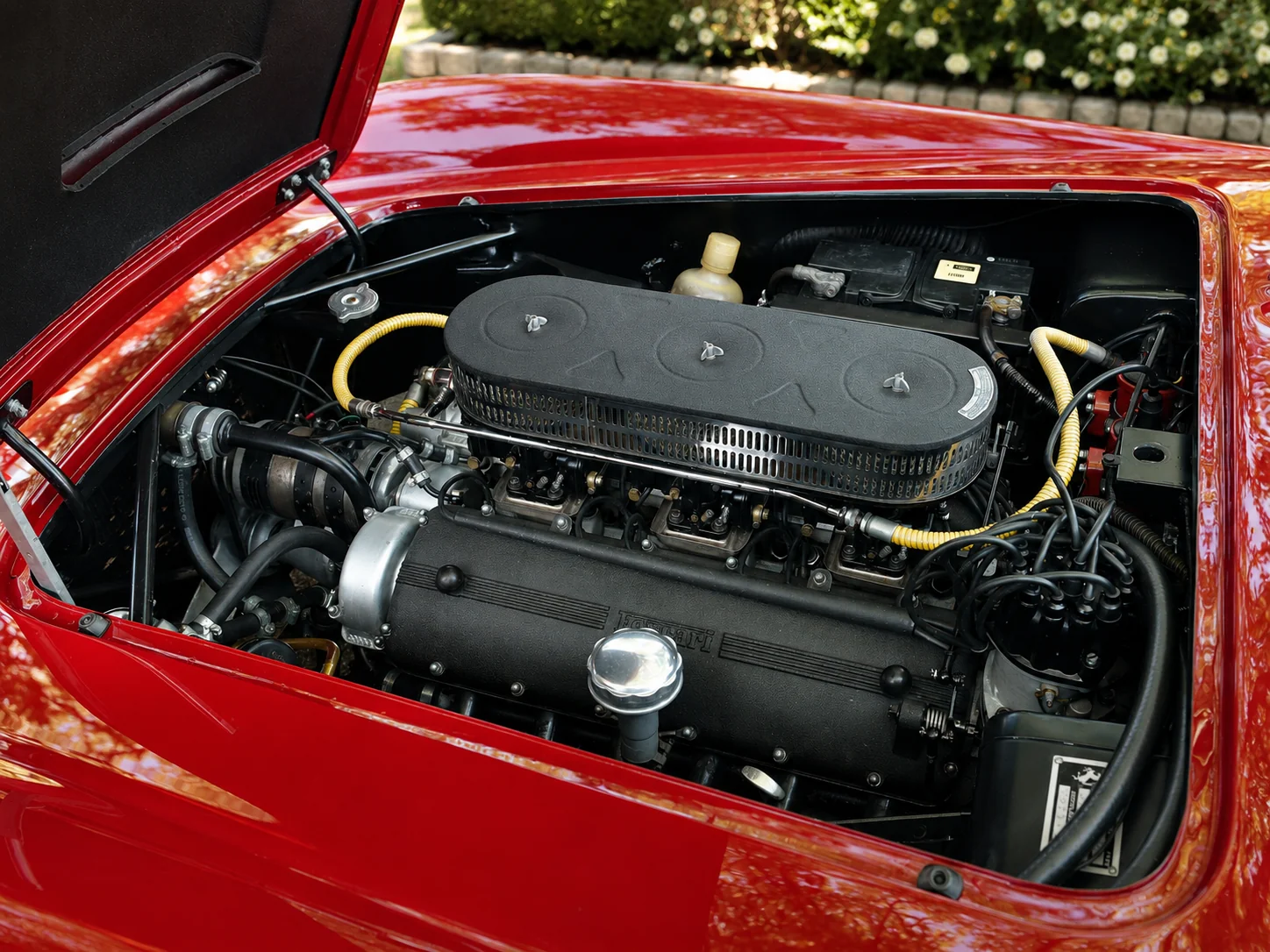
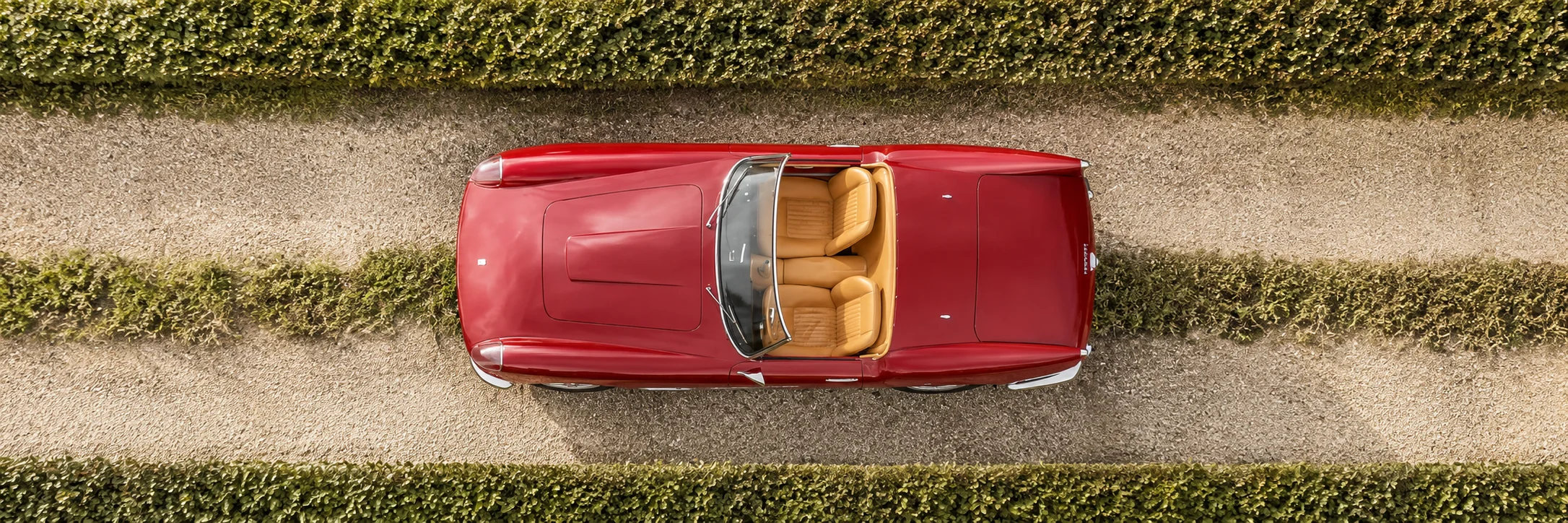
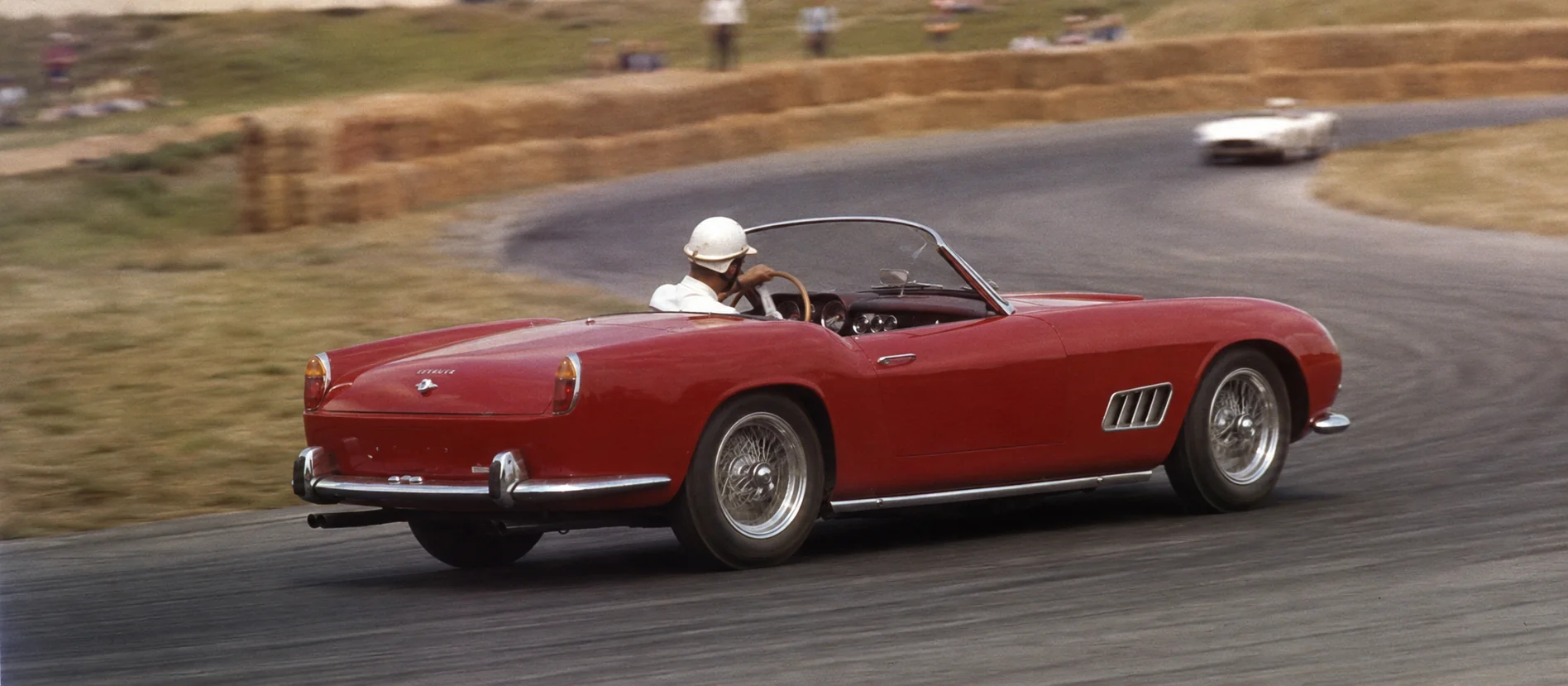
Stand next to the car and the details separate it from the ordinary.
Not by Pinin Farina, who drew it, but by Carrozzeria Scaglietti in Modena. Panels formed by hand over a tubular frame, the same workshop and the same methods behind Ferrari’s competition berlinettas of the period.
One of thirty-eight California Spyders ordered with covered lamps. Plexiglass follows each wing unbroken into the nose, the configuration collectors prize above the open-lamp cars.
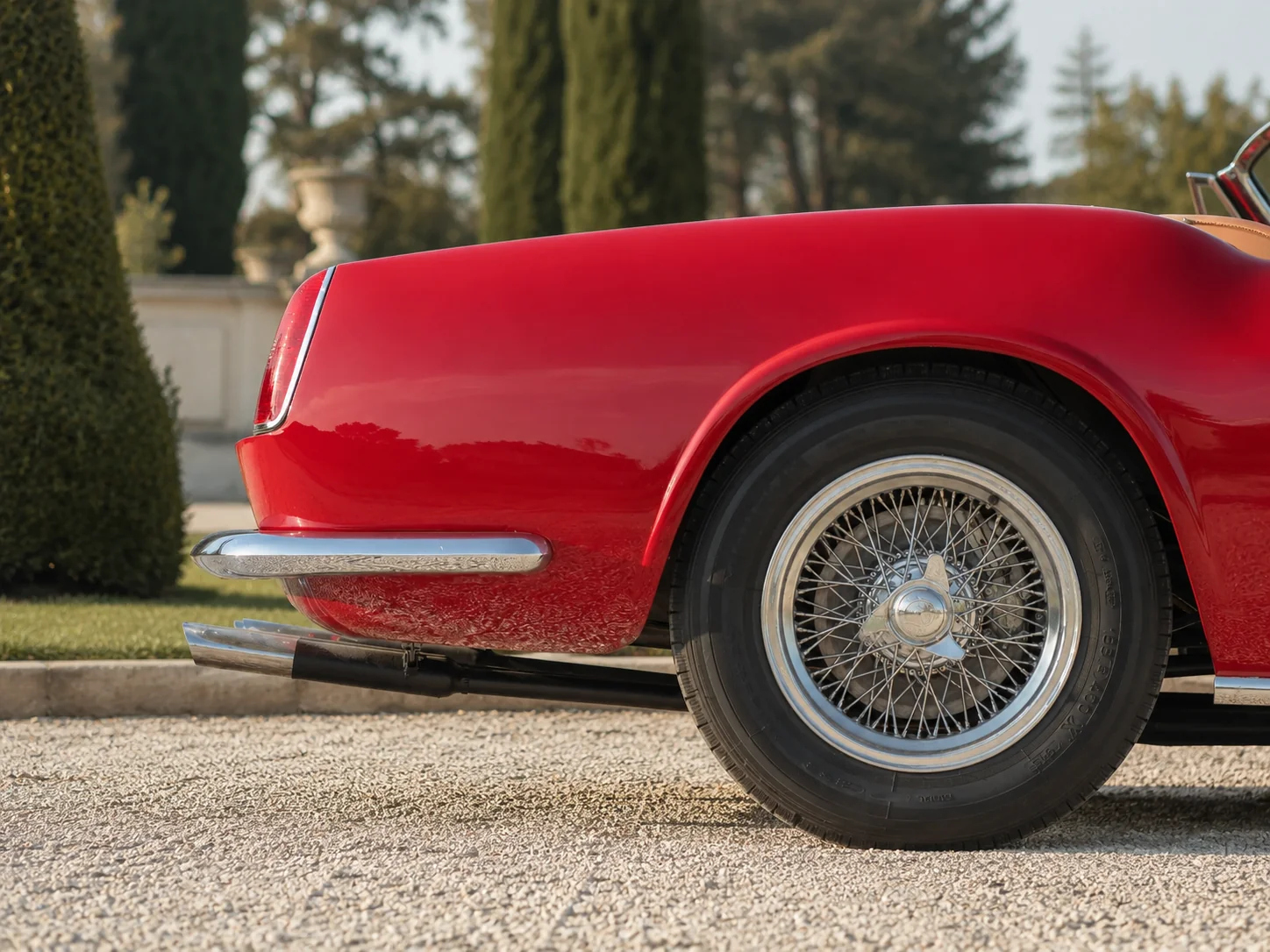
Chromed spokes on 16-inch rims, secured by knock-off hubs and correct to the car. They are as much a part of the period silhouette as the coachwork itself, and unmistakably of their moment.
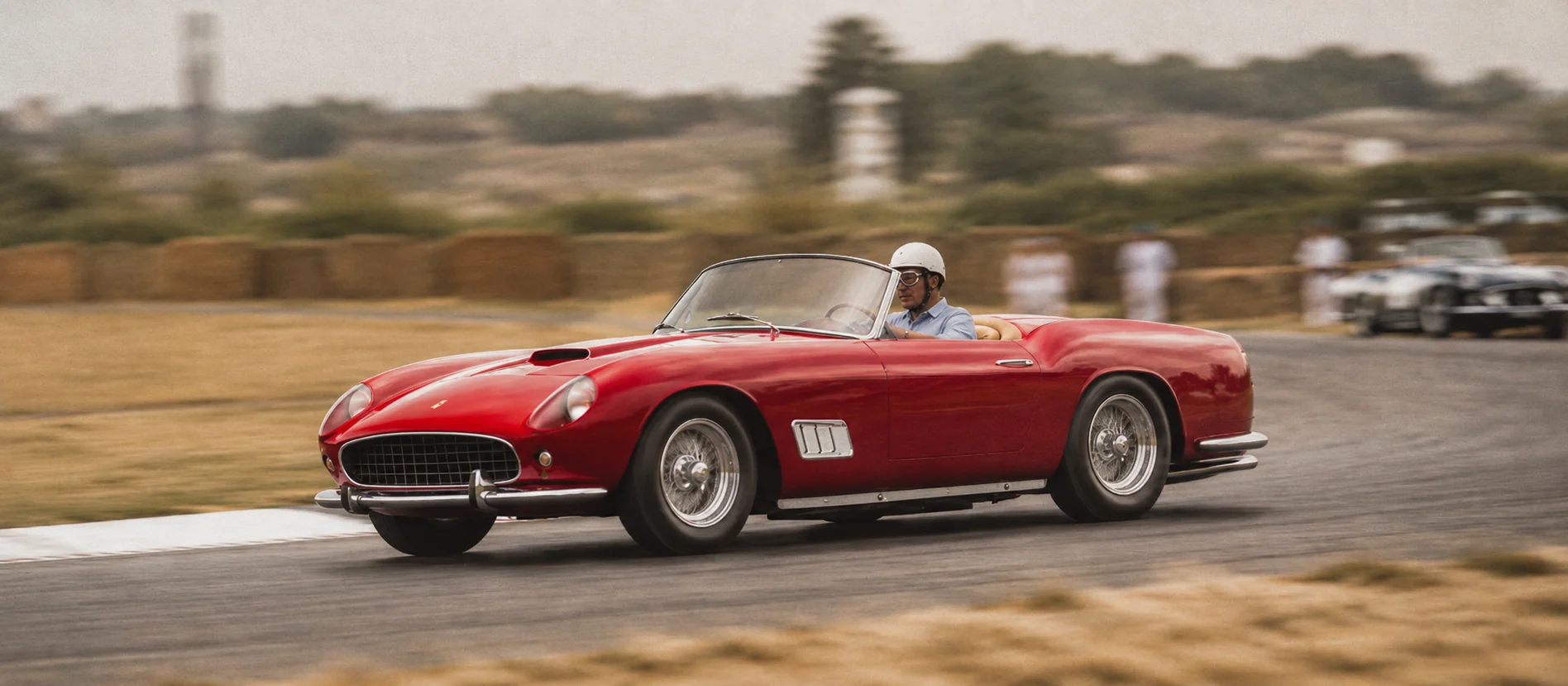
This was never a car apart from the racers. In the hands of others, the model took fifth overall at Le Mans in 1959 and won its class at Sebring the same year. Road and competition cars were, underneath, the same idea.
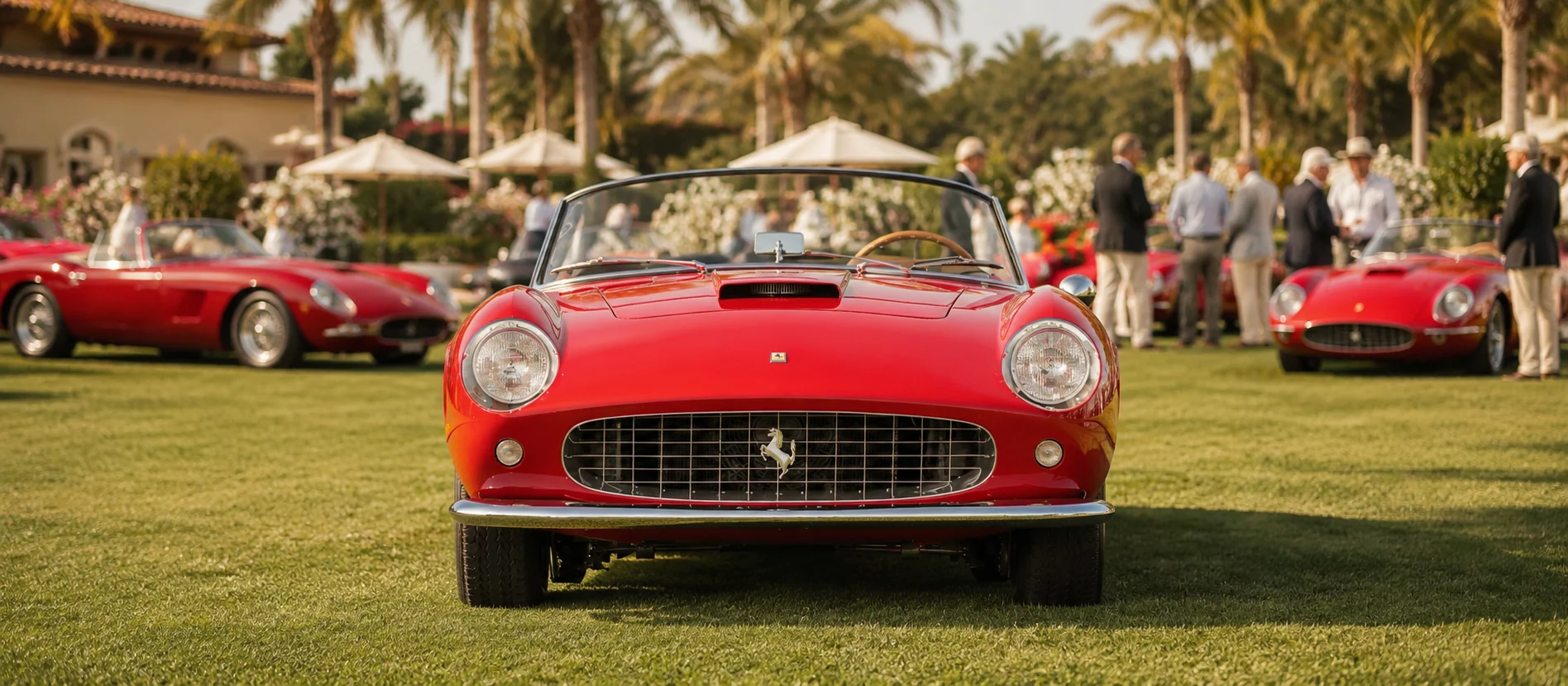
A Classiche-certified early California opens doors that money alone does not. With its documentation in order, this car is the kind of entry the great concours and tours are built around.
Eligibility for any given event is confirmed on application, but few cars arrive so ready to be shown, and driven, among their equals.
Fifty were built on the long chassis. This is the third, and the first that California ever saw. Enquiries are handled personally and in confidence.